



The first direct attack by Iran-backed Houthi militants on Saudi tankers in the Red Sea region triggered an immediate reaction from financial markets. Fears of escalation and potential U.S. retaliation pushed commodity prices to multi-month highs, while weakening the dollar.
Brent crude at highest since June
The situation around the key maritime route in the Bab al-Mandab Strait is escalating rapidly. Information about the attack on two Saudi vessels led to another ~3% jump in Brent crude prices, breaking the $97 per barrel level on the September contract for the first time since June. Following the rollover on the xStation platform, Brent crude is currently trading at nearly $92 per barrel on the October contract.
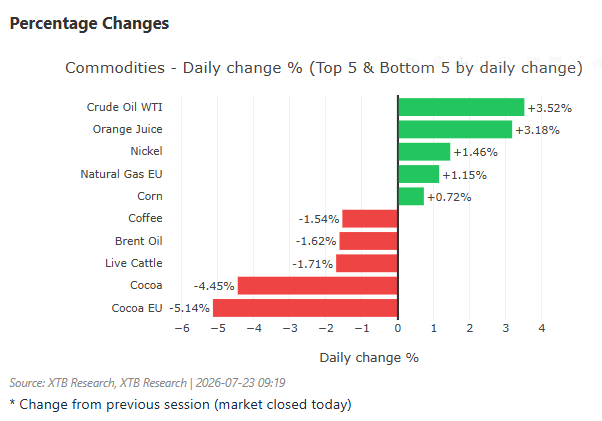 Brent crude change reflects futures contract rollover. Source: XTB
- Geopolitical risk: This is the first blow aimed directly at commercial oil shipments in this region, which significantly raises the probability of retaliatory action by the United States.
- Supply pressure: The market has begun to rapidly price in the risk of supply chain disruptions through the Red Sea and Suez Canal. It is worth noting that this is currently the main supply channel to Asia.
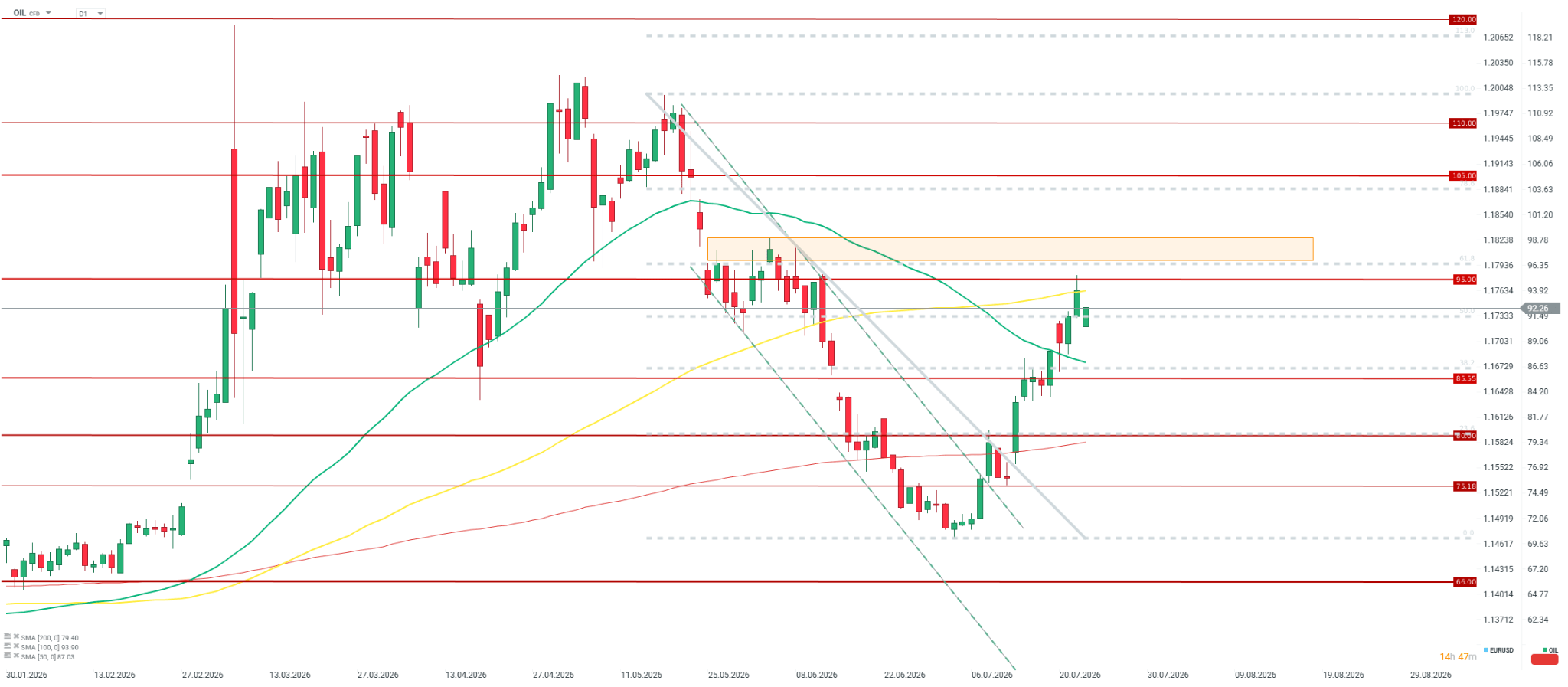 Brent crude continues to rise after the futures rollover, although there was a reaction at the 100-period average yesterday. The next important resistance is the zone between $96 and $98 per barrel. Source: xStation5
Is the dollar losing its "safe haven" status?
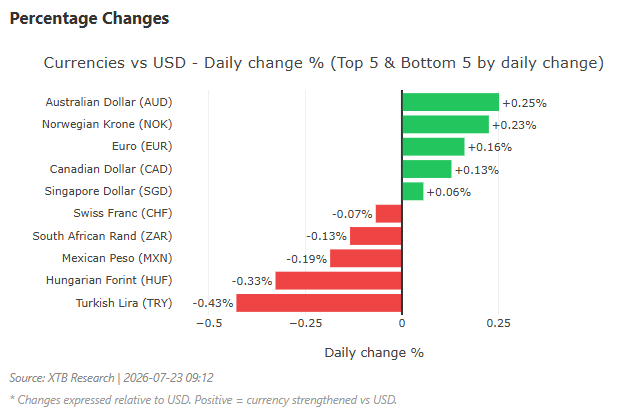
A surprising reaction was recorded in the currency market. Despite the rise in geopolitical tensions, the dollar index is losing as much as 0.2%. Unlike the initial phase of the conflict, investors are not currently treating the US currency as the first choice in times of crisis.
- Aussie leads gains: The Australian dollar (AUD) gained up to 0.3% today, driven by very strong local labor market data for June.
- Euro up: The common currency (EUR) is gaining nearly 0.2% ahead of today's decision by the European Central Bank (ECB).
Asian optimism vs. weak Big Tech results
Sentiment on global stock markets is sharply divided:
- Strong surge in Asia: Most Asian indices rose, led by South Korea's Kospi, which rebounded by over 4% today.
- Pressure in the West: Futures on indices in the US and Europe are recording declines. The main burden turned out to be the publication of financial results from American companies. Alphabet showed phenomenal results, mainly in terms of cloud revenue growth, while the market fears rising CAPEX.
- Sell-off in the technology sector: Shares of giants such as Alphabet, Tesla, IBM, and Texas Instruments lost in after-hours trading, effectively cooling investor sentiment.



Economic Calendar - Start of Wall Street Earnings Season, Hawkish RBA, and Middle East Tensions (13.10.2026)



Morning Wrap: Tech Crash in Asia and Hawkish Central Banks in the Shadow of an Oil Shock (13.10.2026)



📊Market Wrap: Europe Rebouns Despite Higher Oil and Dollar (12.10.2026)


Chart of the Day: Will the RBI's bold regulatory package rescue the rupee? (12.10.2026)