



Brent crude (OIL) is down nearly 3% today, trading around $81 per barrel. If the current weakness persists, the market could naturally gravitate toward a test of the $73–76 range — the levels seen in late February and early March, before the Israeli and U.S. strikes on Iran. On the daily timeframe, the RSI stands at 31.2, a very low reading that suggests the market is approaching oversold territory (which should not be confused with a signal of trend reversal). Meanwhile, the MACD indicator does not yet point to fading downside momentum. It appears that the ceasefire in the Persian Gulf arrived at a critical moment, removing the risk of significant supply disruptions from the market. As a result, investor attention is once again shifting toward production dynamics rather than physical constraints on oil flows.
Today, Iran's ISNA news agency reported that the U.S. blockade of the Strait of Hormuz is in the process of being dismantled. Markets could soon see headlines highlighting a surge in shipping activity, including oil tanker traffic through the strategic waterway. This new reality may allow the futures market to gradually erase the geopolitical risk premium that had been built into prices. Despite ongoing concerns regarding supply and inventories, oil futures could return to a more normalized pricing environment faster than spot markets. The prevailing trend remains bearish, and unless bulls manage to push prices back above the key $87 resistance level, the base-case scenario continues to point toward a risk of further downside.
OIL (D1 timeframe)
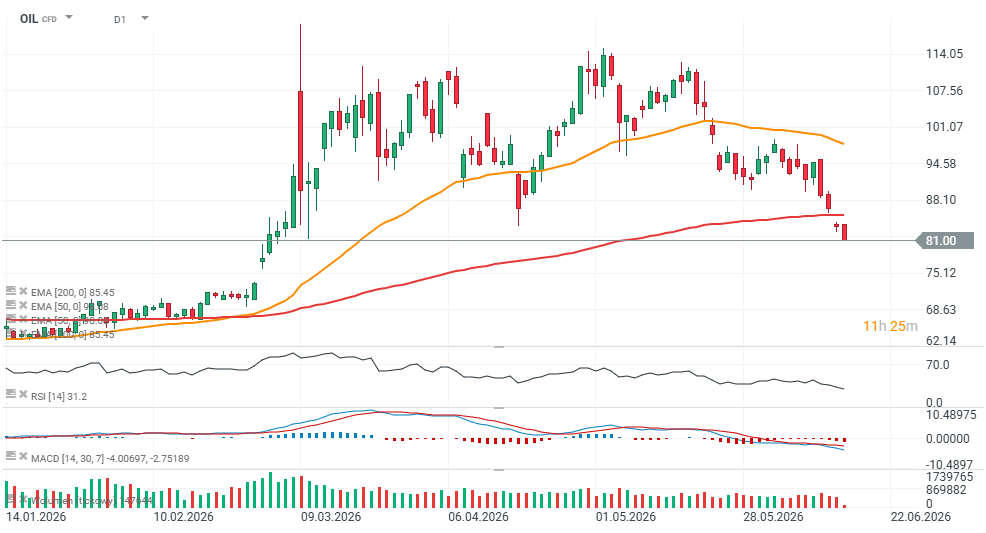
Source: xStation5



Daily Summary: Oil at five-month highs, indices under pressure (23.10.2026)


US Open: Further declines on Wall Street, Brent above 111 USD, AI correction continues (14.10.2026)


Chart of the Day: Is USDJPY running out of road? Inflation forces the BoJ to act, but the Fed could spoil the Yen’s rally



Macro Calendar: Preliminary PMI Readings and Earnings Ahead