



Oil prices (OIL) are falling by over 7% to around $90 per barrel after U.S. President Donald Trump suggested that negotiations between Washington and Tehran could resume this weekend. The ceasefire between Israel and Lebanon appears to be holding, giving markets some room for cautious optimism. The current ceasefire between the U.S. and Iran is set to expire on April 21.
Brent is heading for a weekly decline, while WTI is down nearly 10% since the start of the week. Washington and Tehran are “very close” to reaching a deal, according to Trump, who added that Iran has agreed not to pursue nuclear weapons for over 20 years. Limiting Iran’s nuclear ambitions has been cited by Trump as one of the main reasons behind the conflict. The key factor remains the Strait of Hormuz — currently partially blocked (around 20% of global oil supply). Any credible prospect of reopening it implies a return of significant volumes to the market, putting downward pressure on prices.
The market remains highly binary:
- progress in negotiations = downside pressure
- breakdown or escalation = sharp rebound
Current prices (~$90–$100) reflect a balance between:
- hopes for de-escalation
- ongoing supply disruptions
Physical supply remains constrained: flows through Hormuz are still far below normal levels, and the U.S. blockade continues to limit Iranian exports. Even if the strait reopens, supply recovery will be gradual — the market will not rebalance immediately, which may keep prices relatively elevated. Demand is starting to act as a counterforce: both the IEA and OPEC signal weaker global demand in the coming months, adding structural pressure on prices.
Volatility is likely to remain high, as markets are reacting more to geopolitical headlines than to short-term fundamentals. Long-term risk remains: restoring disrupted production could take up to two years, and control over the Strait of Hormuz is still unresolved.
OIL (D1 timeframe)
Yesterday, oil approached $100 and met strong resistance, then pulled back below the EMA50 (orange line), which may indicate extended bearish momentum. If negotiations lead to narrowing differences between Tehran and Washington, prices could come under pressure toward the $80 area, where several key price reactions are visible, and potentially toward $70–75, a pre-war levels. The correction from local highs already exceeds 20%. If talks collapse and Iran maintains its nuclear stance and control over the Strait of Hormuz, Brent could return above $100 per barrel.
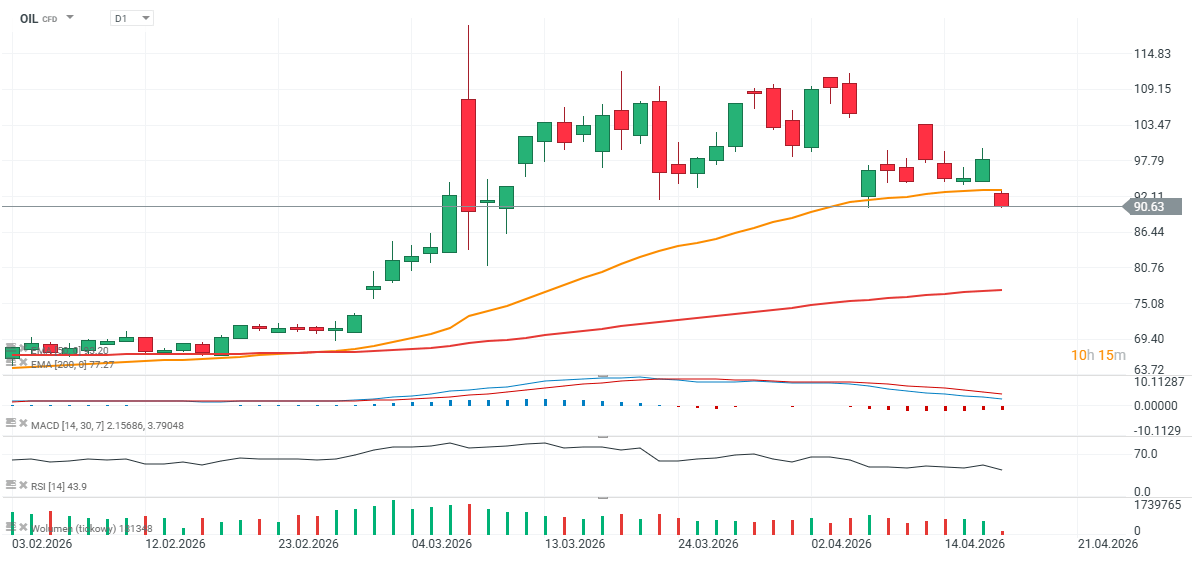
Source: xStation5


Oil gains as U.S. crude inventories fall


U.S. indices attempt to rebound after recent losses


Hot inflation data from the US🔥📈 PPI and retail sales are rising!


Nickel market panic 🚩 INSG revises forecast, surplus in 2027?