



Cruise operator Royal Caribbean is down as much as 6% in today’s session. This is a reaction to a significant transaction the company may close in the near future.
The transaction is Royal Caribbean’s purchase of a 50% stake in Sandals Resorts. Sandals Resorts operates 17 vacation resorts in the Caribbean, mainly around Jamaica. The purchase price is expected to be USD 3 billion, with financing to be provided by Morgan Stanley. The multiple cited in publications about the deal is roughly 10 times EBITDA.
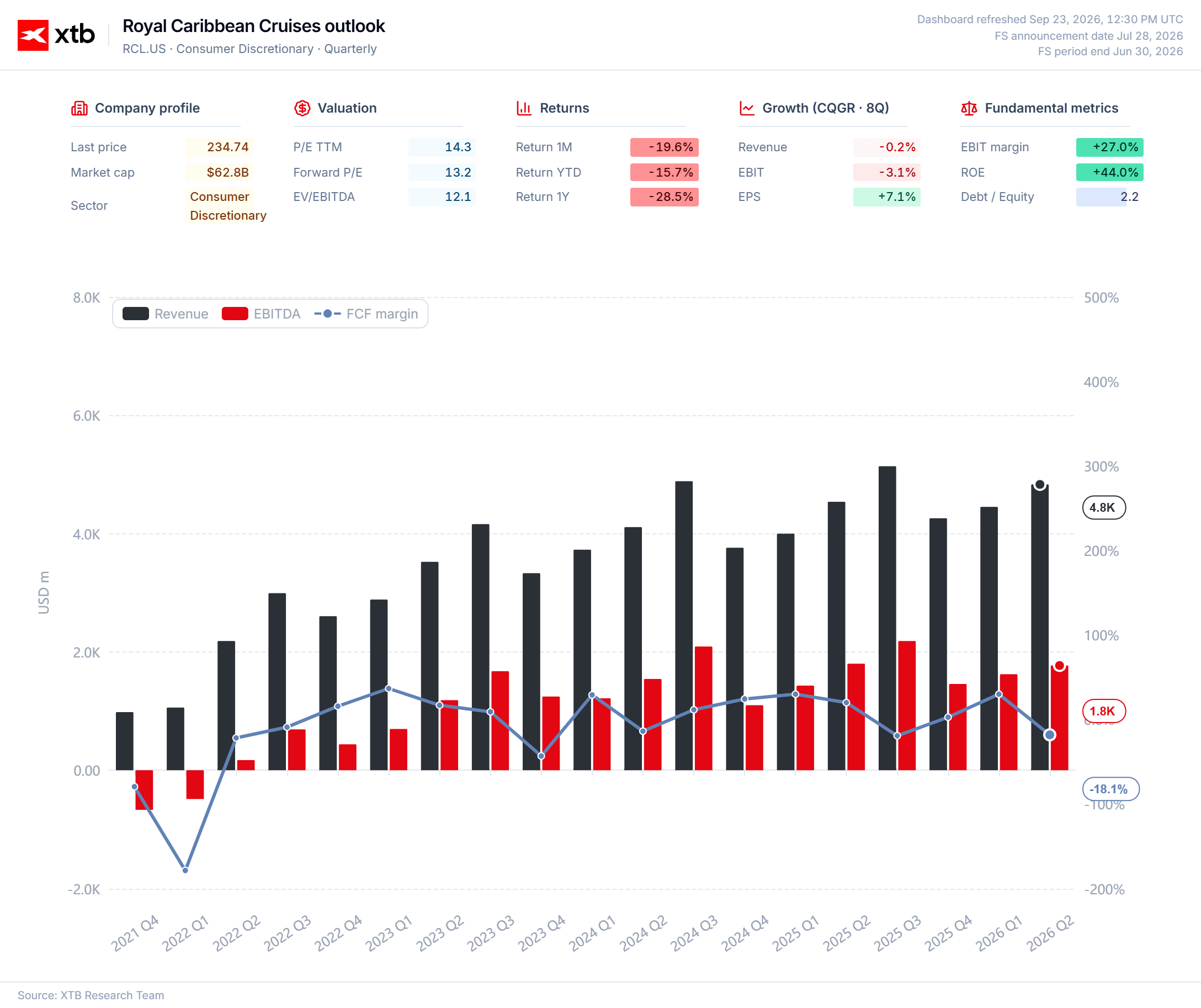
Comparing these metrics with the official valuation suggests that the acquired resort business generates EBITDA of around USD 600 million per year. Extrapolating average margins in the sector in that region implies additional free cash flow of about USD 100 million per year. Management speaks optimistically about the deal, projecting it will close in early 2027 and begin delivering benefits that same year.
However, these are purely theoretical assumptions due to the lack of other information, such as Sandals Resorts’ debt or required capex. And that is only the beginning of the issues with the company’s presumed new acquisition.
Large debt funded purchases
Sandals Resorts is to be managed jointly with the Stewart family, which has owned and run the resort business to date. This means Royal Caribbean’s control will not be absolute, although Financial Times reports that over time Royal Caribbean is expected to acquire the remaining stake.
A much more important issue is Royal Caribbean’s own financial situation.
The cruise operator has a fairly large debt problem, and taking on additional multi billion dollar loans in a period of elevated cost of capital is, understandably, viewed negatively by the market.
The company currently carries USD 23.4 billion of debt on its balance sheet, and it is still rising. The average cost of financing is about 4.66%. That implies annual debt service costs of roughly USD 1.2 billion. The company’s debt situation is not black and white, however. With the company’s current rating in the lower range of investment grade, refinancing would imply a rate of around 5.8%. But most of the company’s liabilities remain long term.
If the company were to borrow to fund the Sandals Resorts purchase at today’s rates, it would mean the cash flows from the investment would likely be negative for many years. But expecting free cash flow profitability from this investment is, fundamentally, a misunderstanding of Royal Caribbean’s business model.
Business model
Royal Caribbean stands out not only for high leverage, but also for a high margin compared with other cruise operators. This relationship is not incidental.
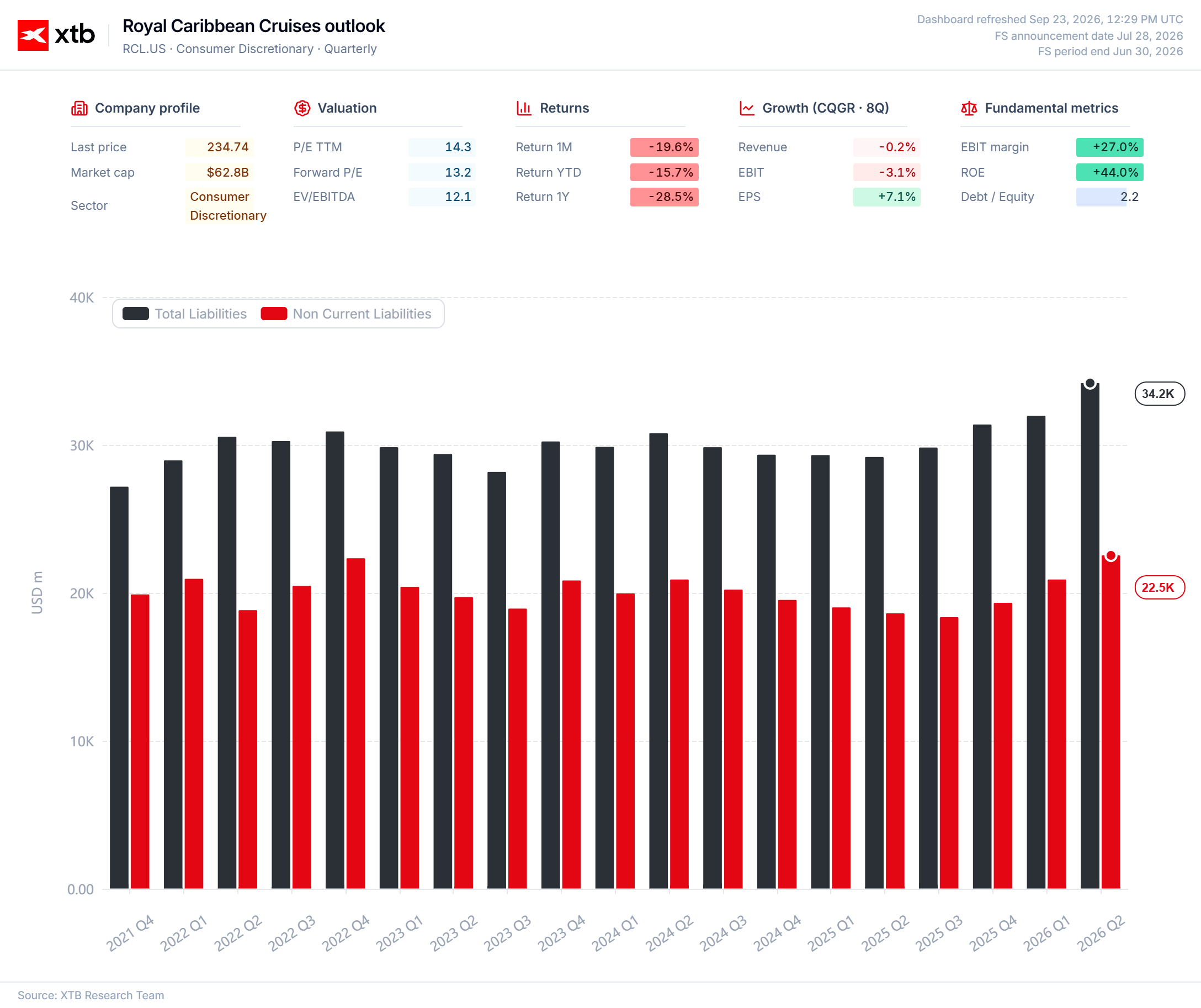
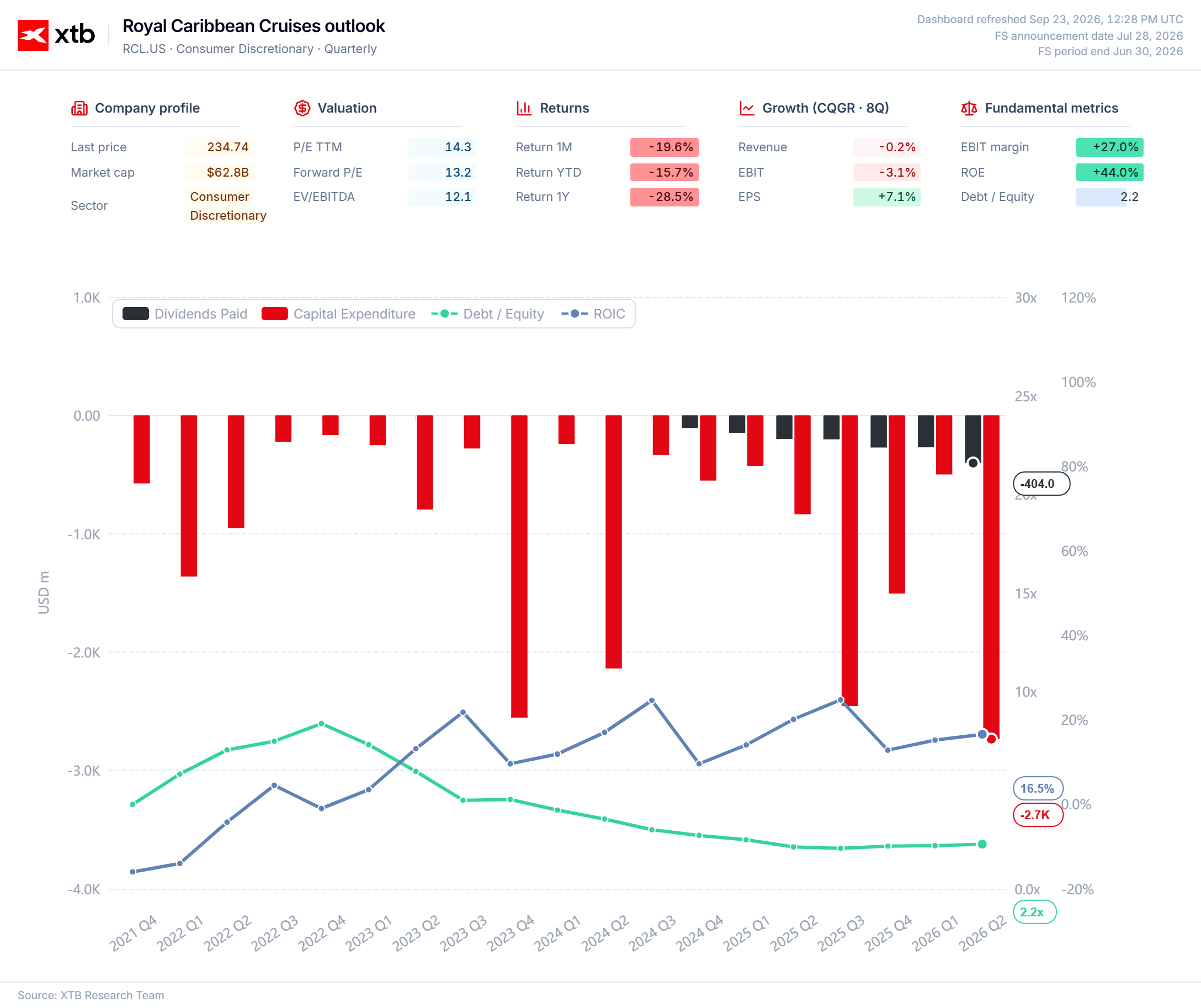
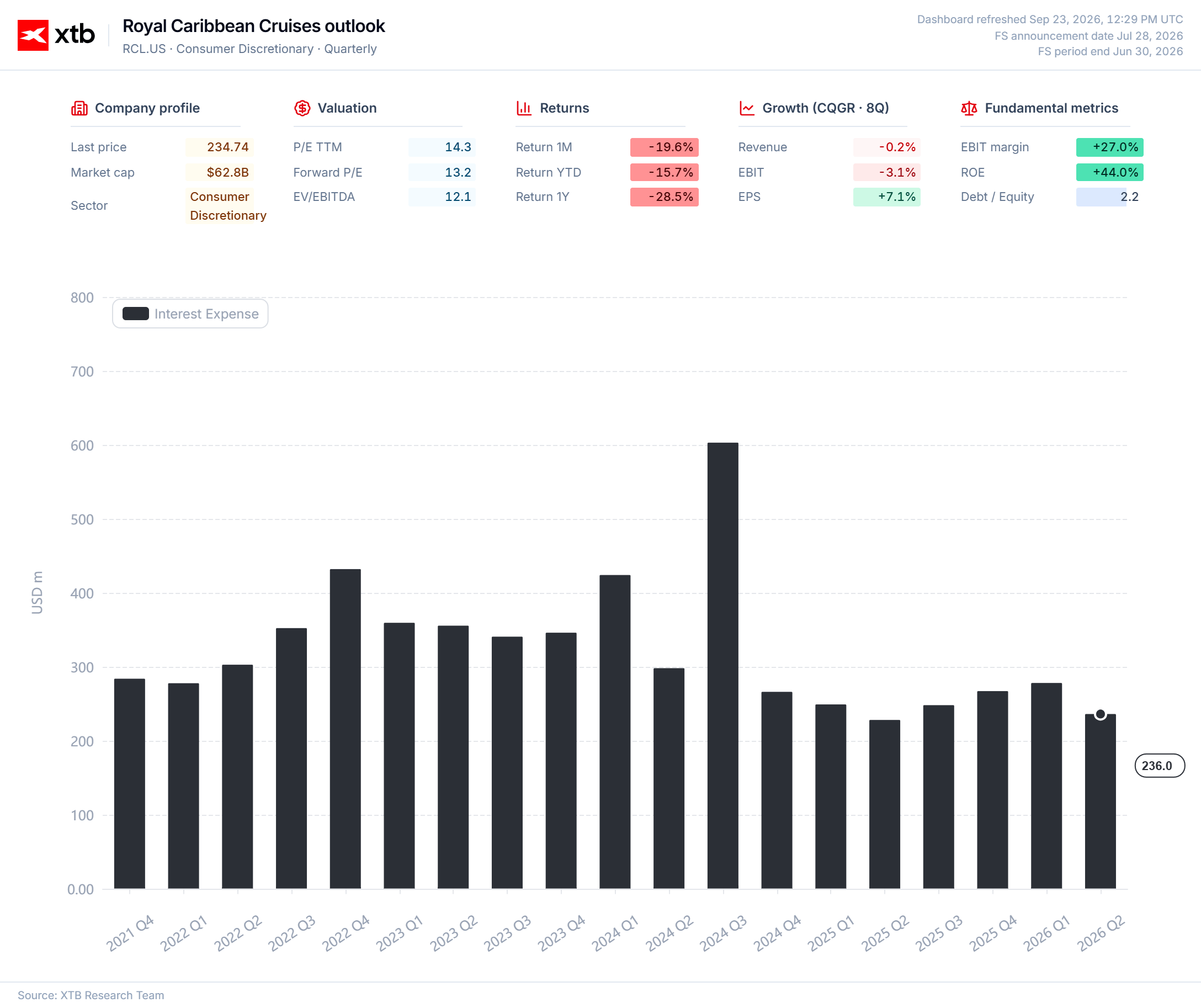
The cruise business is capital intensive by definition. The key measure of operating efficiency is not low debt, but managing debt effectively.
The reference to the Caribbean in the company’s name is not a marketing gimmick. It is the company’s primary region of focus. In recent years, a clear shift has been visible toward turning not only the cruise itself into a product, but also the destination.
Owning resorts enables synergies, combining distribution channels, and diversification.
In this context, for Royal Caribbean it means:
- Buying resorts means consolidation of the local market (the Caribbean) and a better ability to defend or expand margins.
- Acquiring new customers and retaining more of them within the group during their vacation. This potentially means a large increase in profitability for both business components without major cost expansion (apart from interest).
- Diversification toward fixed, land based vacation destinations reduces the company’s exposure to commodity markets and geopolitics.
Fundamentals vs perception
If debt is not as big a problem as the nominal debt figure suggests, and the acquisition is the execution of a long term strategy, then why the selloff?
Sentiment toward cruise operators has been negative for some time. This stems from oil prices and monetary policy, which hits the sector twice.
- Higher interest rates in response to inflation worsen companies’ ability to manage debt and expand leverage.
- Oil and distillate prices translate directly into company costs and compress margins.
In these conditions, the market is less focused on potential value over a multi year horizon and reacts more to recent impulses. However, geopolitics may paradoxically have a positive impact on Royal Caribbean. Because most of the Middle East remains in an ongoing armed conflict, this may catalyze a shift in vacation destinations from the Middle East to the Caribbean or other regions that can offer safer leisure travel.


ASML disappoints on revenue but delivers stronger profits and raises guidance 🍳 What’s next for the AI sector?



Daily Summary: Earnings Season Kicks Off on Wall Street Amid Mixed Sentiment


SpaceX Wants to Fly Starship Almost Every Day. Musk’s Business Empire Is Betting on It


Micron Expands Share Buybacks to $35 Billion!