



- US strikes on Kharg Island—Iran’s main oil export terminal—combined with Tehran’s retaliation against Saudi petrochemical facilities in Jubail indicate that the conflict is expanding into the oil and gas sector, suggesting a negotiation deadlock.
- Iran is signaling a shift toward a more aggressive posture. The Revolutionary Guard has declared that “restraint is over” and warned of strikes beyond the region, raising the risk of broader international escalation.
- There are growing indications of direct threats to US and allied infrastructure. Iranian statements suggest potential targeting of military bases, energy assets, and even carrier strike groups.
- The Gulf region is increasingly affected by the conflict. The UAE has activated air defense systems in response to missile threats, pointing to a widening geographical scope.
- Internal logistics in Iran are coming under pressure. Attacks on railway infrastructure and disruptions to train services indicate strain on domestic transport systems and mobility.
- The Strait of Hormuz remains the central flashpoint. Maritime incidents and disruption risks are driving oil prices higher and fueling concerns over global energy supply.
- Markets are reacting immediately to the escalation. Brent and WTI crude prices are rising, while US equity futures are declining, reflecting a shift toward risk-off sentiment.
- Diplomatic channels remain limited and ineffective. Iran has rejected a temporary ceasefire proposal, maintaining hardline conditions, while mediation efforts continue without tangible progress.
- Global economies are preparing for potential energy shocks. The EU is convening coordination meetings, while Japan is securing oil supplies, highlighting rising concerns about prolonged disruptions.
- Crucially, Iran has responded to the US 15-point plan with its own 10-point proposal, which appears largely unacceptable to Washington. It includes demands such as lifting all sanctions, long-term security guarantees, Israeli withdrawal from Lebanon, and a $2 million transit fee per vessel passing through the Strait of Hormuz under Iranian coordination—effectively implying control over the strait.
US500 (D1 timeframe)
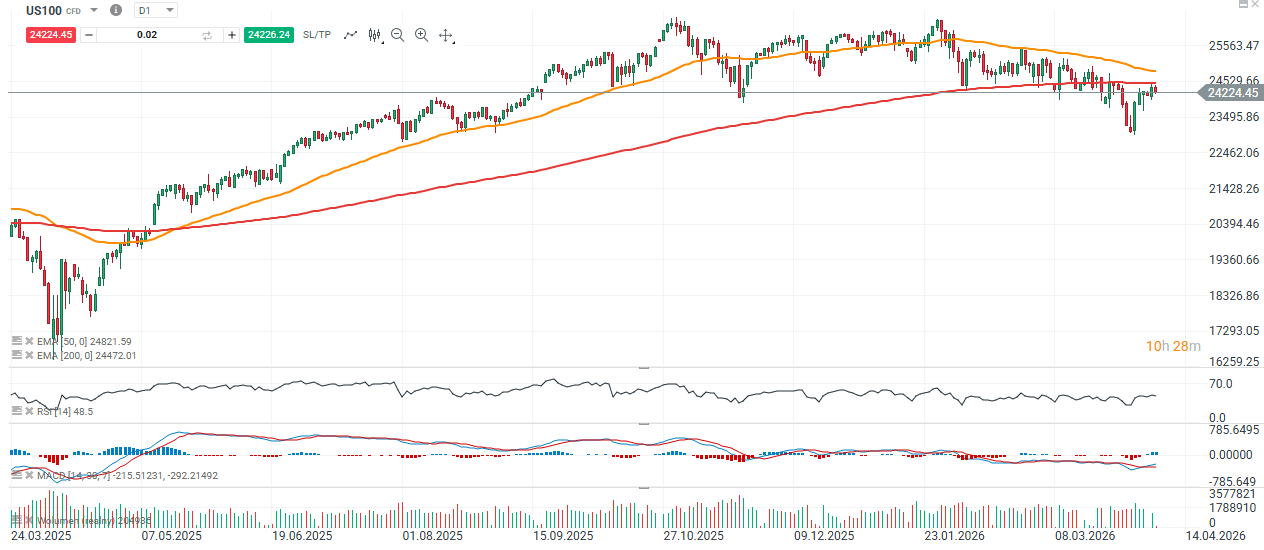
Source: xStation5



Three Markets to Watch Next Week (09.10.2026)



Daily Summary: A Shallow Rebound Ahead of Earnings Season


US OPEN: Trump de-escalates, OpenAI supports Wall Street sentiment

🔼 Gold gains 1.2%