



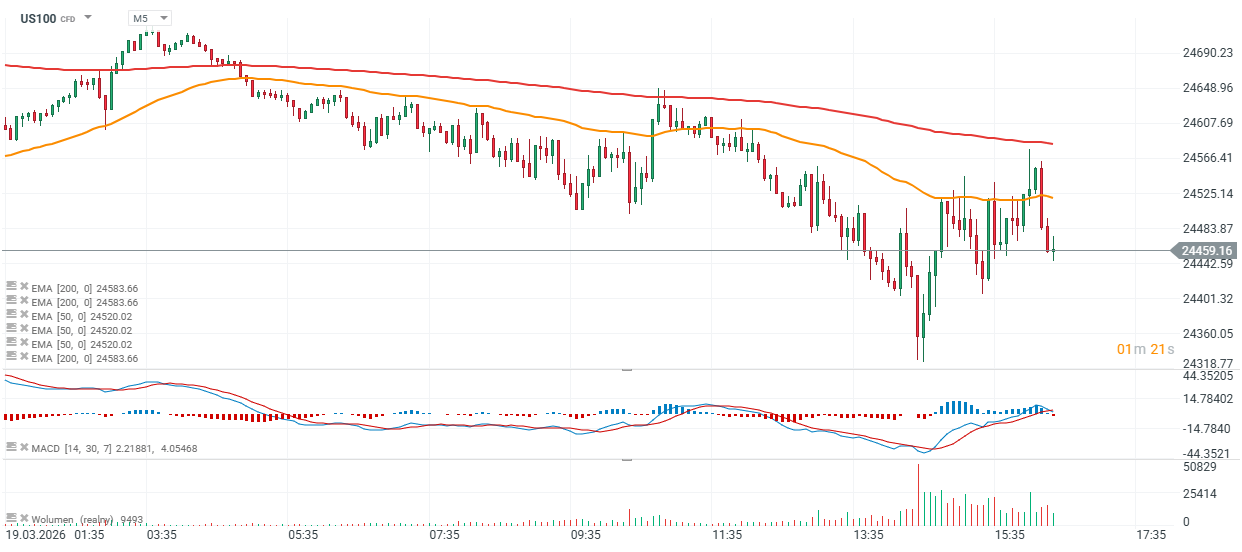
Thursday’s session on Wall Street is again marked by a sell-off in risk assets, while oil prices remain elevated amid further escalation of the conflict involving Iran. The Dow Jones is down around 290 points, or 0.7%, while the S&P 500 and Nasdaq are falling by 0.8% and 0.6%, respectively.
- Beyond geopolitical tensions in the Middle East, equities are also pressured by yesterday’s producer inflation data and today’s low jobless claims. These releases reinforce the more hawkish tone of the Fed’s projections, with markets increasingly considering a stagflation scenario in the U.S.—a combination of weaker economic growth and persistently elevated inflation.
- In commodities, Brent crude stands out, rising 3% to $111 per barrel, while WTI is up 1% to $97. The scale of the move suggests investors are increasingly pricing in the risk of prolonged energy supply disruptions in the Middle East.
- The surge in oil prices was driven by a series of attacks on regional gas infrastructure, including Iran striking a key LNG export terminal in Qatar and an earlier Israeli attack on Iran’s South Pars gas field. Tehran’s subsequent retaliation against Qatari energy assets has increased the geopolitical risk premium and heightened concerns over further escalation.
- A joint statement by leaders of the UK, France, Germany, Italy, the Netherlands and Japan expressing readiness to ensure safe passage through the Strait of Hormuz should be seen as an attempt to stabilize market sentiment. At the same time, such coordination highlights the material risks to global energy trade.
- Equity market weakness has been exacerbated by Wednesday’s sharp sell-off, with the Dow Jones hitting a new yearly closing low and breaking below its 200-day moving average. Futures pricing suggests markets assign around a 75% probability that rates will remain unchanged in 2026, adding further pressure to valuations.
Among individual names, Micron shares declined 2% despite strong results supported by tight memory supply, with the move largely attributed to profit-taking. Meanwhile, Eli Lilly’s update on its next-generation obesity drug retatrutide—potentially best-in-class - was met with a muted market reaction.
US500 and US100
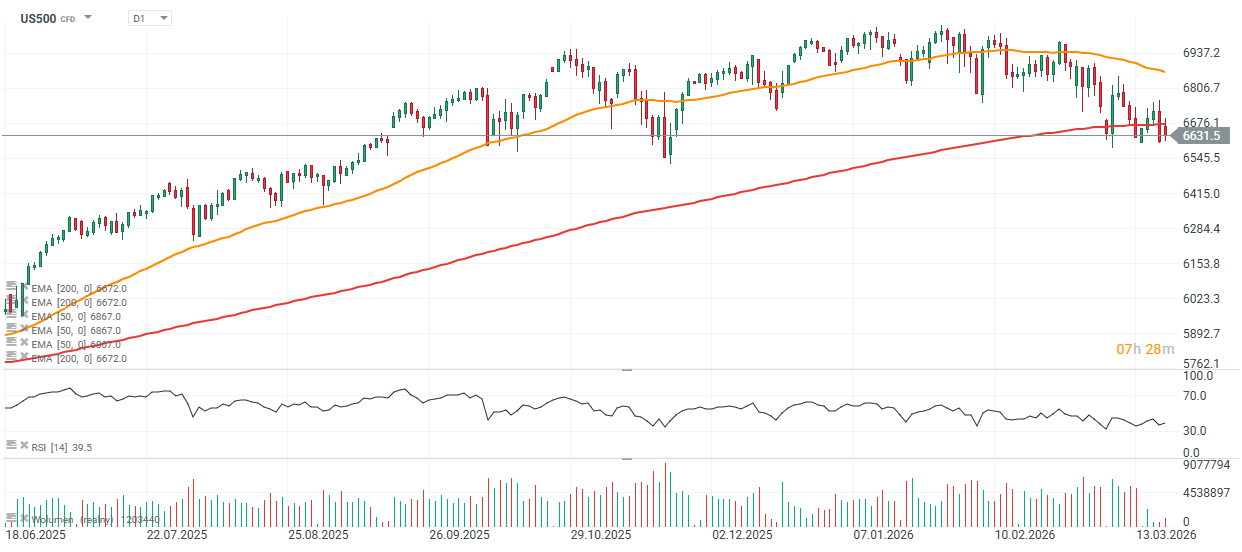
A key technical signal is the S&P 500 (US500)falling below its 200-day moving average for the first time since May 23. This strengthens concerns that the market may be entering a deeper correction phase rather than experiencing a temporary pullback.
Source: xStation5
Source: xStation5
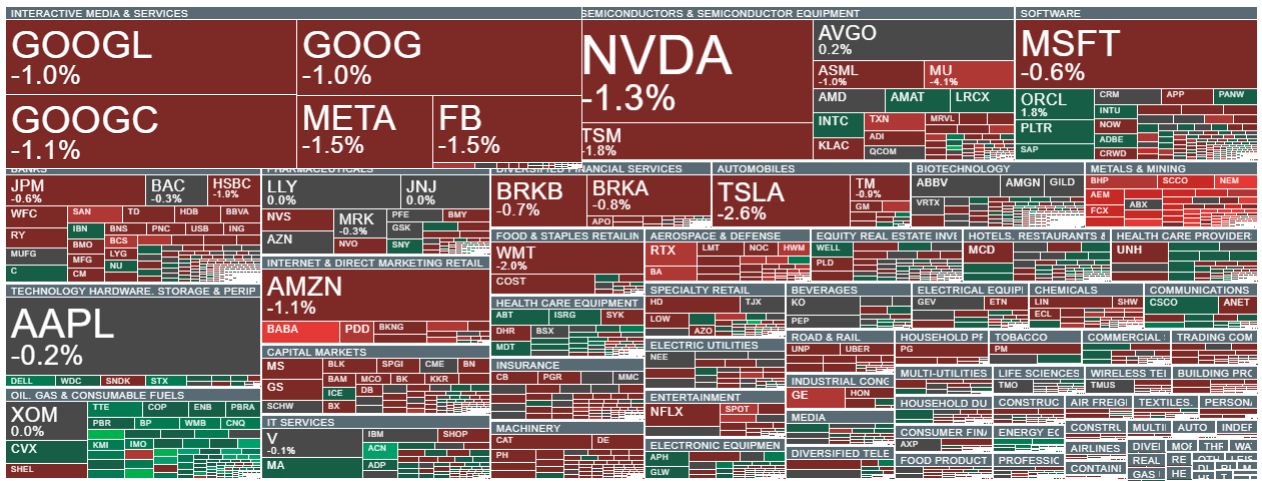
Mining stocks are seeing sharp declines today, driven by a heavy sell-off in metals, while oil and gas companies are gaining. Sentiment in the technology sector remains weak.
Source: xStation5
Weak Alibaba results
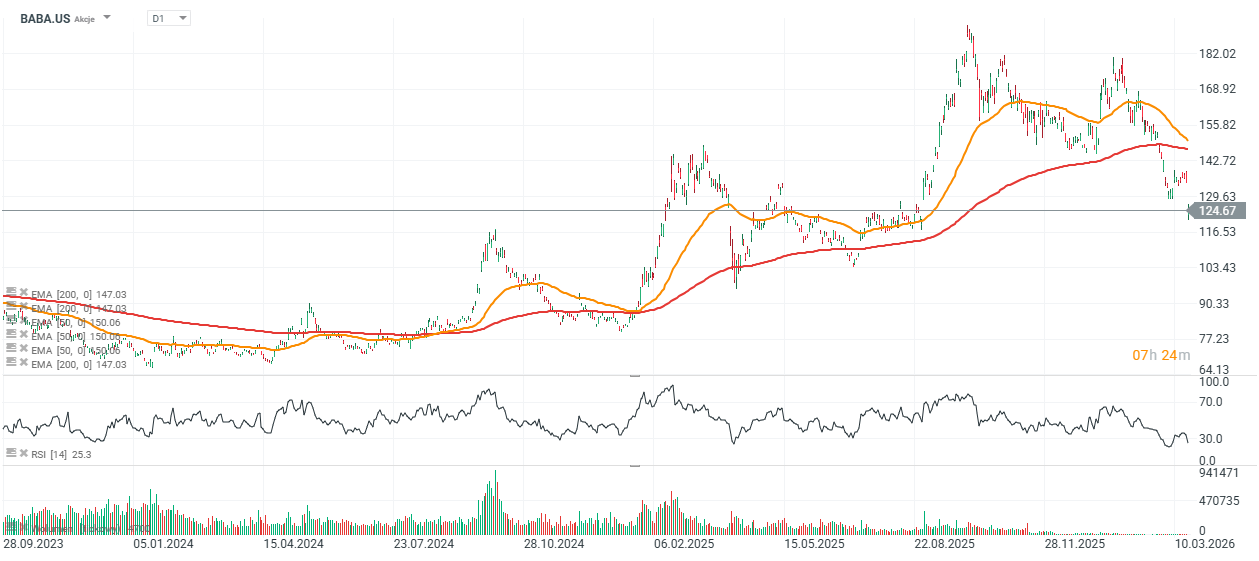
Alibaba reported quarterly results for the period ending December 31, 2025, which came in below expectations and confirmed the company is in a challenging transition phase. Revenue reached 284.8 billion yuan versus 290.7 billion yuan expected, while net income fell 66% year-over-year to 15.6 billion yuan, triggering a negative reaction in U.S. trading.
- From an investor perspective, the weakness reflects an aggressive investment strategy rather than a one-off issue. Alibaba is increasing spending on quick commerce, user experience and technology, which weighs on near-term profitability but aims to rebuild long-term competitiveness. The scale of the operating income decline highlights that the cost of transformation is higher than previously anticipated.
- The key growth driver remains cloud and artificial intelligence. The Cloud Intelligence segment grew revenue by 36% year-over-year to 43.3 billion yuan, with AI-related products delivering triple-digit growth for the tenth consecutive quarter.
- At the same time, management is raising the strategic bar, targeting $100 billion in annual cloud and AI revenue within five years. This implies maintaining growth of around 35% annually, underscoring both the opportunity and the execution challenge.
In practice, Alibaba is accelerating its shift from an e-commerce platform toward an AI-driven technology company, positioning itself as one of China’s leaders in this space. The key question remains whether these heavy investments will translate into sustained improvement in group-wide financial performance. Today, the company’s ADRs are down more than 7% and are nearly 40% below recent highs.
Source: xStation5
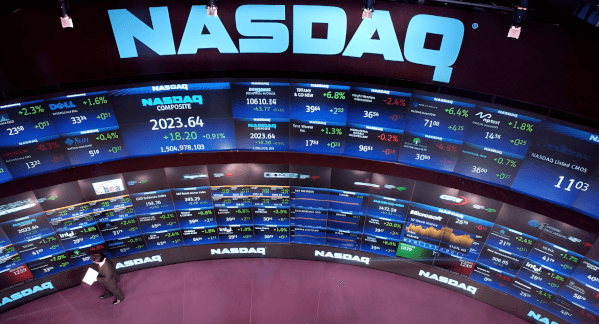


Chart of the Day: US100 (Nasdaq 100). Rebound in AI trade vs. weakening technical picture



Macro Calendar - UK Labor Market, ZEW Sentiment, and Wall Street Giants' Reports



📈Morning Brefieng: AI sector rebound collides with still-expensive oil (20.10.2026)

Daily Summary: Nasdaq and AI Stocks Rebound Ahead of Big Tech Earnings 🚀