


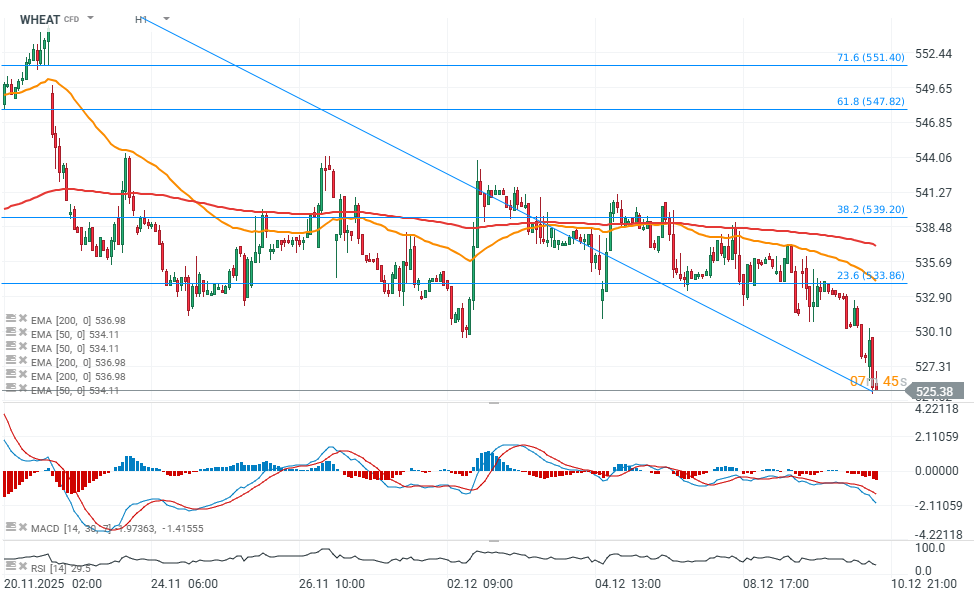
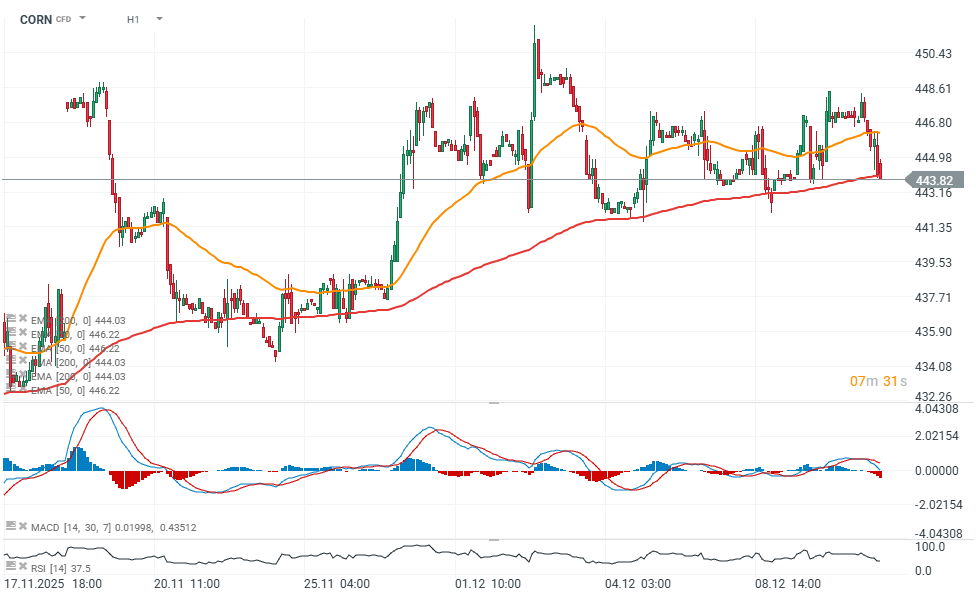
Yesterday at 5 PM GMT, the USDA released the WASDE report, which increased volatility across agricultural commodity markets. Despite a short-lived rally in corn futures, prices quickly erased those gains, while wheat futures continued their downward trend. The USDA cut US ending stocks for corn more sharply than the market consensus expected, although the figure still fell within the Dow Jones forecast range. This was not a surprise, yet it signals a modest improvement after a year dominated by bearish supply-side pressures. US ending stocks for soybeans and wheat remained unchanged, with USDA keeping both balance sheets stable heading into year-end.
WASDE Summary
- Global corn stocks were also reduced more than the market anticipated, confirming a tightening trend in fundamentals both globally and in the United States. This provides an important and moderately positive signal for the demand side.
- World wheat stocks increased by approximately 3 million tonnes, reflecting higher production in Argentina, Canada and the European Union. The wheat market continues to face persistent supply pressure.
- US corn exports were raised by 125 million bushels, one of the key components of the report. Export inspection data points to exceptionally strong foreign demand, and shipment volumes from September to November may exceed 800 million bushels. This would mark the strongest pace since 2007.
- US corn ending stocks were lowered to 2.0 billion bushels due to stronger domestic usage. No production changes were introduced, indicating a classic demand-driven tightening.
- USDA made no adjustments to US corn or soybean yields or production. This aligns with the typical pattern for the final WASDE report of the year, in which production forecasts are rarely revised.
- The US soybean and wheat balance sheets remained stable. On a global basis, soybean stocks increased slightly, while wheat stocks saw a more pronounced rise.
- Market reactions were moderate. Participants noted that the report did not bring major surprises, which in the current environment is often interpreted as a positive signal for producers and market participants.
- Attention now shifts to the January revisions, with expectations increasingly pointing toward a possible downward adjustment in US production for the 2025 season. If confirmed, this may support old-crop grain pricing.
- Weather conditions in South America remain a key factor, as they traditionally play a crucial role in market direction. The market is also monitoring potential new export purchases from China, particularly in soybeans.
- Soybean futures remain under technical pressure, moving toward completing a classic head-and-shoulders pattern. However, lower prices increase the probability of opportunistic import buying.
- Corn and wheat remain weak, awaiting the next market catalyst, which may emerge with the January data release or changing weather patterns in key producing regions.
Source: xStation5
Source: xStation5


Daily summary: Wall Street recovers losses despite a surge in yields 🗽 Gold and silver retreat


BREAKING: EURUSD with limited reaction to Fed Minutes from September meeting



Large decline in crude inventories 🛢️📉


📉 Gold loses 1.7%