

FRA40

Trade FRA40 CFD

Past performance or future forecasts does not constitute a reliable indicator of future performance.

Fees

Less cost, more investments

Competitive fees

Trade with leverage and keep costs low

Free deposits/withdrawals

Manage your funds. Take advantage of free deposits and withdrawals.

No custody fees

No custody fees up to 250,000 EUR. After that, 0.02% per annum, minimum £10.

Learn

What is CFD trading?

New to CFDs? Learn how CFD trading works and how you can trade on both rising and falling prices without owning the underlying asset. We explain the basics, financial leverage, potential benefits and risks in simple terms.

Read the Beginner’s Guide

Create an account

Open your XTB account in just a few simple steps. Get access to global markets and a wide range of investment opportunities.

Make a deposit

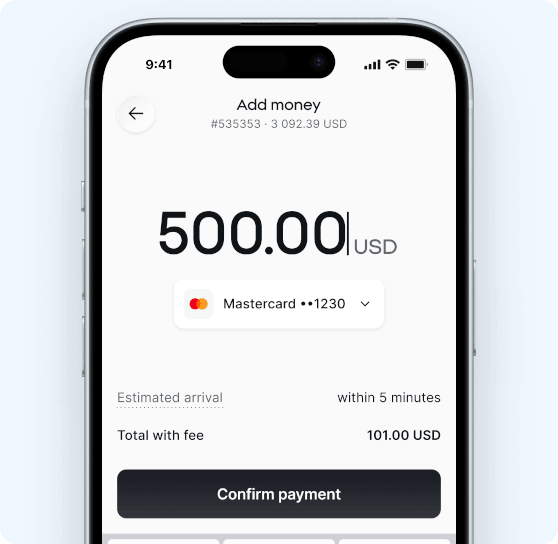
Add funds to your account using one of the available payment methods. Once your funds are available, you’re ready to start investing.

Trade FRA40

Find FRA40 in XTB App, choose how much you want to invest and place your order. Start building your portfolio on your terms.

And make your money work in many ways

Explore more ways to put your money to work - from global stocks and ETFs to more. Discover Investment Plans and earn interest on uninvested funds while you wait for your next investment opportunity.

Popular in the markets

Most traded CFDs

Discover where CFD traders are most active. Explore some of the most traded CFDs across global markets and see which instruments are in focus.

News

Keep your finger on the pulse with our latest market news

We are regulated by leading financial regulatory authorities across multiple markets worldwide.

About instrument

Invest in FRA40 CFD

Indice FRA40 is a stock market index that represents the top 40 companies in France listed on the Euronext Paris stock exchange. FRA40 is commonly known as the CAC 40, and it is one of the most widely followed indices in Europe. The index's performance reflects the French economy's strength and the success of France's largest corporations.

CFDs, or contracts for difference, are a popular way to trade the FRA40 index. CFD trading allows traders to speculate on the price movements of the FRA40 index without owning the underlying asset. CFDs are leveraged products that can magnify profits, but they also amplify potential losses. Traders should be aware of the risks involved before trading FRA40 CFDs.

Thanks to the XTB offering, it is possible for traders to invest the FRA40 using CFDs.

The best time to trade the FRA40 index CFD is during the European trading session, which is typically between 9:00 AM and 5:30 PM Central European Time (CET). During this time, there is generally more liquidity and volatility in the market, which can provide more trading opportunities.

Interesting facts about the FRA40 index include that it was first introduced on December 31, 1987, with a base value of 1,000 points. Since then, the index has grown to become one of the most widely followed indices in Europe, with a current market capitalisation of over €1 trillion. Additionally, the FRA40 index is rebalanced every quarter to ensure that it accurately reflects the performance of the top 40 companies in France.

Investors can use the FRA40 index to gain exposure to France's largest corporations and the French economy. It is important to be aware of the risks involved in CFD trading and to trade during the European trading session for the best trading opportunities.

Margin

5%

Leverage

20

Commission

-

Market hours

8:00 am - 10:00 pm

Interesting Facts

What to know before investing in FRA40

FRA40, The French Stock Index: FRA40 represents the top 40 publicly traded companies on the Euronext Paris Stock Exchange. It serves as a key barometer for the French stock market and provides insights into the country's economic performance.

Influence of Blue-Chip Companies: FRA40 includes prominent blue-chip companies like L'Oréal and Total, representing diverse sectors such as luxury, energy, and banking. These giants can significantly impact the index's movements.

Weighted by Free-Float Market Cap: FRA40 uses a free-float market capitalisation weighting methodology. This means that only the shares available for public trading are considered, giving a clearer picture of a company's true market value.

Link to the French Economy: As France's premier stock index, FRA40 reflects the nation's economic health. Changes in the index can be linked to broader economic events, government policies, and consumer sentiment.

Indicator of Investor Sentiment: FRA40's performance often reflects investor sentiment towards the French economy. Bullish movements suggest confidence, while bearish trends may signal uncertainty or caution.

Global Impact on FRA40: International events can influence FRA40, especially those affecting global markets. Geopolitical events, trade agreements, and economic trends beyond France can have ripple effects.

Historical Performance: Studying FRA40's historical data can reveal trends and patterns that help investors understand past market behaviour and make informed decisions. The FRA40 index has had several notable drops and gains in recent history, including a 50% drop during the global financial crisis of 2008 and a 26% gain during COVID-19.

Relationship to Eurozone Indices: FRA40 can exhibit correlations with other Eurozone indices like DAX30 and IBEX35. Analysing these relationships can aid in diversifying international investments.

FRA40's Role in European Finance: Paris is a financial hub in Europe, and FRA40 plays a crucial role in shaping the region's financial landscape and attracting investment to French businesses.

Contributions to Civilisations: French companies listed in FRA40 have made significant contributions to global culture and innovation. From haute couture to culinary delights, these firms are part of France's cultural legacy.


FAQ

Do you have more questions?

Find answers to our most commonly asked questions. Still have a question? Please contact our customer support team.

FRA40 index is a benchmark that tracks the performance of 40 of the largest and most liquid stocks listed on the Euronext Paris exchange in France.


FRA40 is calculated based on the total market capitalisation of the top 40 companies listed on the Euronext Paris exchange.


CFD trading on FRA40 allows traders to take advantage of price movements in the index without actually owning the individual stocks in the index. XTB offers a possibility to invest in the FRA40 index using contracts for difference (CFDs). 


Trading FRA40 CFDs can be risky, as CFDs are leveraged products that can amplify both profits and losses.


For the best trading opportunities, traders should consider trading the FRA40 index during the European trading session, which is generally between 9:00 AM and 5:30 PM CET.

The performance of FRA40 reflects the strength of the French economy and the success of France's largest corporations.


Indices and stocks are not the same thing. An index is a statistical measure of the change in a portfolio of stocks. It is not itself a stock, but rather a composite of the performance of a group of stocks. Stocks, on the other hand, are individual securities that represent ownership in a particular company.

There is no one "best" index for trading. The best index to trade depends on your investment goals, risk tolerance, and other personal factors. Some popular indices for trading include the S&P 500, NASDAQ Composite, and Dow Jones Industrial Average.

It is difficult to rank indices, as different indices are designed to track different types of market segments and have different methodologies. Some of the most well-known indices include: S&P 500, NASDAQ Composite, Dow Jones Industrial Average, FTSE 100, Nikkei 225.

It is possible to trade on FOREX and to trade indices, but they are quite different instruments. FOREX is about trading currencies, while indices represent the performance of a group of stocks. It is not possible to say whether one is "better" than the other, as the choice of which instrument to trade will depend on the individual trader's goals and risk tolerance.