Understand what a crypto rug pull is, how it works, its legality, and how to spot warning signs before investing.
Understand what a crypto rug pull is, how it works, its legality, and how to spot warning signs before investing.
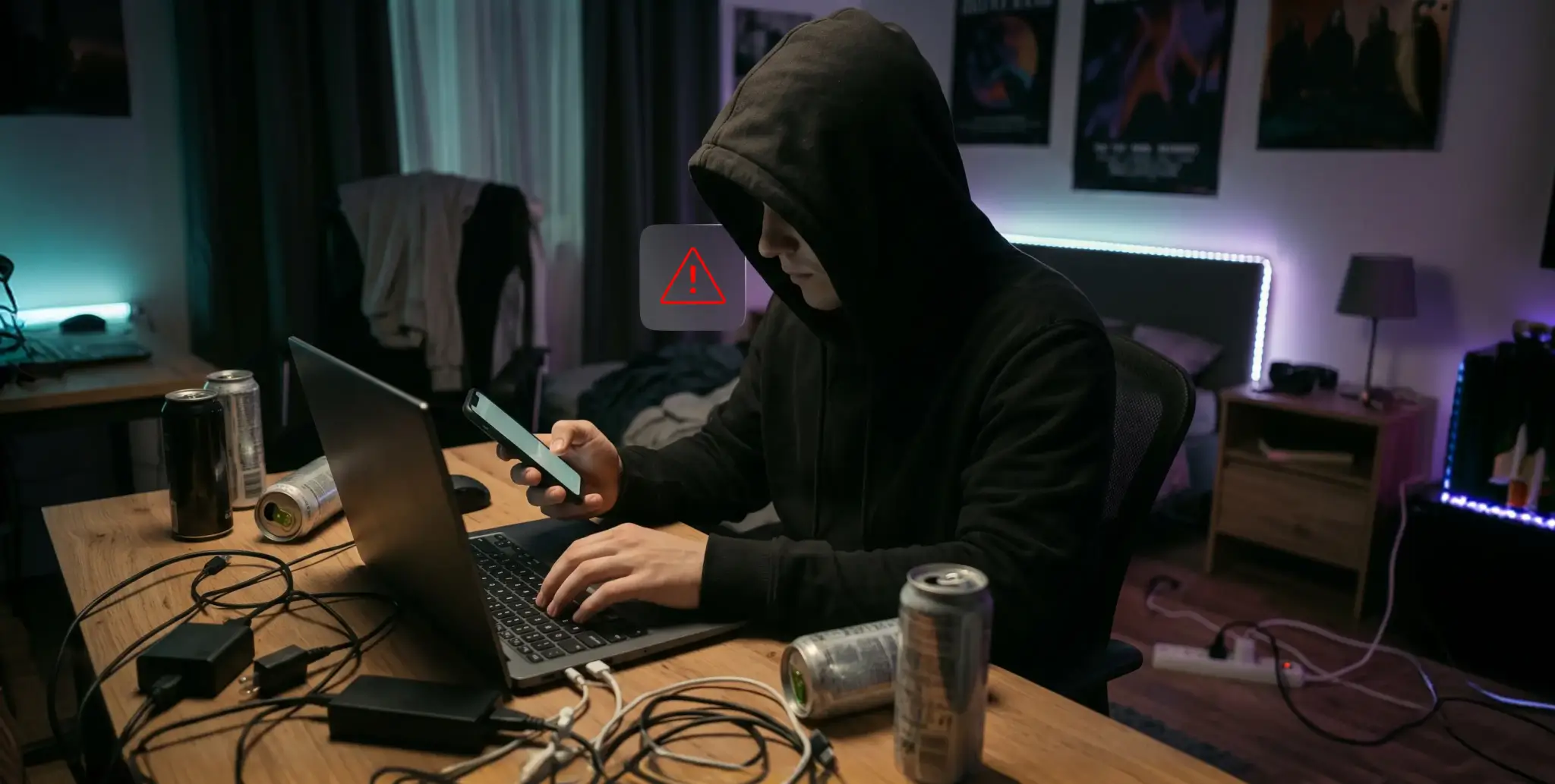
A crypto rug pull is a crypto-asset scam where project creators abandon the project and drain funds, leaving holders with a token that cannot be sold. In 2025 alone, investors lost over $6 billion to these types of schemes, according to the DappRadar report. Understanding the exact mechanism and legal status of this fraud is essential for market participants. You can protect your capital by verifying the smart contract and token distribution before making a purchase.
Key takeaways:
-
Intent and liquidity: A rug pull differs from a standard market price drop because it involves deliberate malicious intent and the active draining of market liquidity by the creators.
- Primary variants: The two main forms involve either withdrawing the liquidity pool on a decentralized exchange or embedding a sell-lock mechanism directly into the token's code.
- Legal standing: In most jurisdictions, this action constitutes a financial crime or fraud, despite the absence of a specific legal statute named "rug pull".
- Fund recovery: Stolen funds are practically impossible to retrieve due to blockchain immutability, making pre-purchase verification the only effective defense mechanism.
What is a rug pull in crypto?
A crypto rug pull is a type of exit scam where token creators intentionally abandon the project and drain liquidity or investor funds, making the token worthless or impossible to sell. The term originates from the idiom "to pull the rug out from under someone", which describes a sudden and unexpected withdrawal of support, which is why victims often say they "got rug pulled". The alternative spelling rugpull is also widely used in the digital asset community to describe this exact event.
To understand the meaning of a rug pull, you must distinguish it from other cryptocurrency schemes.
|
|
|
|
|
|
|
|
|
|
|
|
|
|
|
This fraud requires specific conditions to execute successfully. The asset is typically a new token with no trading history and a permissionless listing on a decentralized exchange. Furthermore, the development team must retain full control over the token supply or the smart contract code.
How does a rug pull work, step by step?
A rug pull operates through a repeatable sequence: creators mint a new token, fund a liquidity pool on a decentralized exchange, generate artificial demand through marketing, and subsequently withdraw that liquidity or sell a massive retained supply at the price peak.
To enable trading on a decentralized exchange (DEX), the creator must supply a trading pair, typically pairing the new token with an established base cryptocurrency. In exchange for providing this liquidity pool, the creator receives Liquidity Provider (LP) tokens. Once retail investors buy the new token and drive up its price, the creator uses those LP tokens to withdraw the entire pool, absorbing the valuable base cryptocurrency and leaving the pool empty.
In a second variant, the development team holds a disproportionately large percentage of the total token supply in unstaked wallets. When the token price reaches a target high, the team dumps their entire holding onto the open market in a single transaction. This floods the market with supply and crashes the price to near zero.
A third method involves smart contract manipulation. The contract code contains hidden functions that block the sell function for all standard wallets. This allows only the creator's whitelisted addresses to execute sell orders, effectively trapping investor funds within the token.
What are the main types of rug pulls?
Rug pulls are categorized into hard variants, where the scam is hardcoded directly into the smart contract, and soft variants, where the team dumps their token holdings without utilizing any malicious code. A hard rug pull utilizes deceptive programming to steal funds. This category includes honeypots with hardcoded sell restrictions, hidden mint functions that allow creators to generate infinite new tokens, and fake ownership renunciations.
Creators might also implement hidden modifiers that alter transaction fees to 100% or restrict transaction limits to prevent selling. A soft rug pull involves no malicious programming but achieves the exact same result. The developers simply abandon the project's development or aggressively sell their openly held tokens. The legal boundary here is much thinner, as project failure due to incompetence differs legally from intentional fraud.
Non-fungible token (NFT) projects also experience this phenomenon. Creators generate massive hype for an upcoming collection, collect the minting funds, and immediately disappear. They leave behind an unfulfilled roadmap and digital images with no secondary market demand.
You must distinguish a rug pull from a standard failed project. A project failing due to poor market conditions or a lack of developer competence is not a rug pull. The defining criteria are malicious intent and the deliberate extraction of investor funds.
Is a rug pull illegal?
In most jurisdictions, a rug pull is actively prosecuted as criminal fraud or embezzlement, even though no specific legal statute uses the exact term; the legal qualification depends entirely on proving the creator's intent to deceive investors.
You must separate the legality of the act from the legality of the project. While issuing a utility token or creating a smart contract might be legal at the time of emission, the subsequent act of draining funds constitutes theft. Law enforcement faces significant hurdles in prosecuting these cases because perpetrators typically utilize anonymous identities, operate across multiple global jurisdictions, and route stolen funds through cryptographic mixers.
The European Union provides a distinct regulatory framework under the Markets in Crypto-Assets (MiCA) regulation. This framework establishes strict information obligations and direct liability for crypto-asset issuers and service providers. This regulatory approach targets the operational mechanics of types of crypto assets to close loopholes that exist in other jurisdictions.
A soft rug pull exists in a legal gray area. An anonymous team selling their own freely tradable tokens on a public market can be considered a legal trading activity. Prosecutors struggle to secure convictions if they cannot prove that the token sale was accompanied by active deception or false promises regarding project development.
How can you spot a rug pull before you buy?
You can largely assess the risk of a rug pull before purchase by sequentially verifying four critical elements: liquidity lock status, token supply concentration, smart contract audit validity, and team identification.
You can increase your crypto security by using a rug pull checker—a type of analytical tool that scans smart contracts and holder distributions. When evaluating a new token, execute the following verification sequence:
- Liquidity lock: Check if the creator's LP tokens are locked in a verified time-release smart contract. An unlocked pool means the creator can drain the liquidity at any moment.
- Holder concentration: Analyze the token distribution on a block explorer. If a few top wallets control a massive percentage of the total supply, those entities can single-handedly crash the market.
- Smart contract audit: Verify if a reputable third-party security firm has audited the code. You must ensure the audit matches the exact contract version deployed on the blockchain.
- Team identity: Investigate whether the development team is publicly identified (doxxed). While an anonymous team does not guarantee a scam, it removes personal accountability if the funds disappear.
- Promotional style: Evaluate the marketing tactics. Beware of projects promising guaranteed high returns, utilizing artificial time pressure, or using influencers who do not disclose their financial compensation.
What happens after a rug pull, and what should you do?
Funds lost in a rug pull very rarely return to victims because blockchain transactions are cryptographically irreversible and the perpetrators usually maintain complete anonymity. After the liquidity is drained, the token experiences a near-total loss of value. The digital asset technically remains in your crypto wallet, but the lack of an active liquidity pool means there is no counterparty available to buy it from you.
When law enforcement successfully identifies a perpetrator, the outcome involves formal criminal proceedings and the confiscation of illicit assets. For example, in 2023, US authorities arrested the creator of the Mutant Ape Planet NFT project for executing a $2.9 million rug pull fraud, demonstrating that legal consequences are possible when identities are uncovered.
If you suspect you have been rug-pulled, preserve the evidence, secure your remaining crypto assets, and report the suspected fraud as quickly as possible. Blockchain transactions are generally irreversible, so there is usually no mechanism that can simply cancel the transaction or restore the lost funds. Start by documenting information that could help identify and trace the incident:
- transaction hashes and relevant wallet addresses;
- the token's smart contract address;
- screenshots and links related to the project;
- messages, websites, and social media accounts used by the team;
- the amount transferred and the approximate time of each transaction.
You should then report the suspected fraud to the appropriate law enforcement or financial authorities in your jurisdiction. If you connected your wallet to a suspicious decentralized application, review and revoke unnecessary token approvals and consider moving unaffected assets to a secure wallet if you believe your wallet may be compromised.
Be particularly cautious of anyone offering to recover the stolen cryptocurrency in exchange for an upfront payment. Crypto recovery scams frequently target people who have already lost money, and no legitimate service can guarantee that an irreversible blockchain transaction will be reversed.
FAQ
FAQ
A rug pull is a crypto scam in which project creators deliberately extract value from investors, typically by removing liquidity, selling a large token allocation, or using malicious smart contract functions. The defining element is intentional deception rather than an ordinary decline in a token's market price.
A rug pull generally involves project insiders abandoning the project or deliberately removing value from it, while a pump and dump involves artificially increasing demand before holders sell at inflated prices. In both cases, investors can suffer significant losses, but the underlying mechanism is different.
A honeypot is a malicious smart contract that allows investors to buy a token but prevents them from selling it normally. The restriction may be hidden within the contract code, while selected addresses controlled by the creators retain the ability to sell.
Sometimes, but often, there is little or no viable market left. If developers remove most of a token's liquidity, holders may technically still own the tokens in their wallets but be unable to sell them at a meaningful price. In a honeypot scam, selling may be deliberately blocked by the smart contract.
Yes. Locked liquidity can reduce the risk of developers immediately draining a liquidity pool, but it does not eliminate rug-pull risk. Developers may still control a large share of the token supply, exploit malicious contract functions, abandon the project, or use other methods to extract value.
No. A reputable audit can identify certain vulnerabilities or malicious functions, but it cannot guarantee that a project is legitimate or safe. Investors should also examine token distribution, liquidity arrangements, team transparency, and whether the deployed contract matches the version that was audited.
Not necessarily. An anonymous development team does not, by itself, prove that a project is fraudulent. However, anonymity can make accountability and legal enforcement more difficult if developers disappear with investor funds, so it can be an additional risk factor to consider.
Recovery is usually difficult because blockchain transactions are generally irreversible, and perpetrators may use anonymous wallets or move assets across multiple addresses. Victims can preserve transaction records and report suspected fraud to the relevant authorities, while remaining cautious of supposed recovery services demanding upfront payments.
There is no single test that can prove a project is safe. Common checks include examining whether liquidity is locked, analyzing how concentrated the token supply is, reviewing smart contract audits, researching the development team, and checking the contract for suspicious restrictions or unusually high transaction fees.
Rug pull checkers can help identify known smart contract risks and suspicious token characteristics, but they cannot guarantee that a project is legitimate. A clean automated scan only indicates that the tool did not detect the risks it was designed to identify.
No. A token losing value or a project shutting down does not automatically make it a rug pull. The key distinction is intent: a rug pull involves deliberate deception or extraction of investor funds, whereas legitimate projects can fail because of poor execution, insufficient demand, technical problems, or market conditions.