


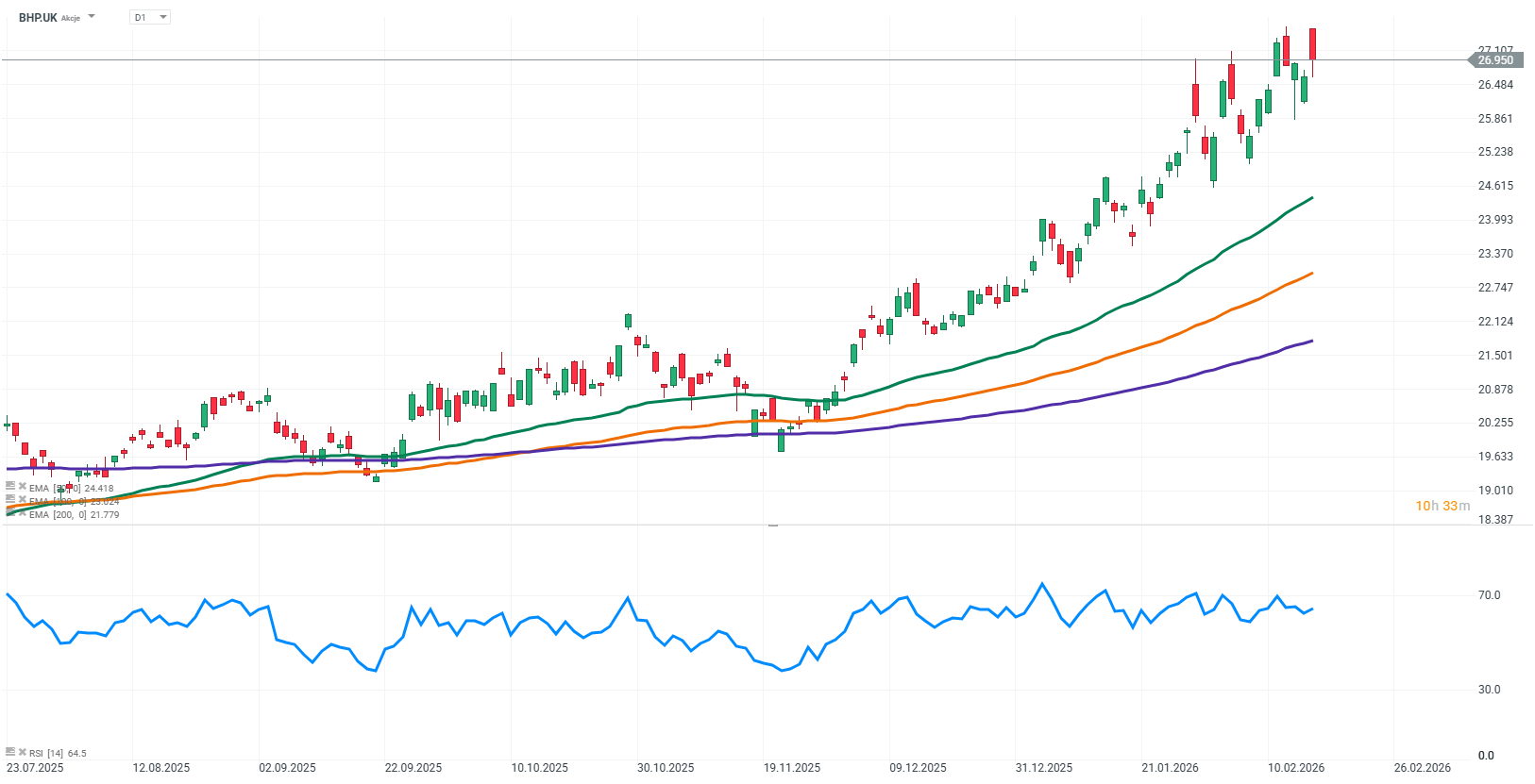
BHP Group has once again demonstrated that it is undergoing a strategic transformation, with copper taking over as the company’s main source of profits. Results for the first half of FY2026, ending December 31, 2025, revealed record achievements: profit reached $6.2 billion, up 22 percent year-on-year, while the copper segment accounted for more than half of the group’s total EBITDA, reaching $8 billion, a 59 percent increase. This success reflects both improved productivity at key mines such as Escondida and the successful integration of acquisitions, including OZ Minerals and the Vicuna joint venture, amid record-high global copper prices.
Source: xStation5
Additionally, BHP concluded the largest silver streaming agreement in the company’s history with Wheaton Precious Metals, valued at $4.3 billion, allowing it to convert part of its future silver revenues into cash today. This deal is an example of effective asset portfolio management. The proceeds will be used to develop copper and potash projects, as well as to provide shareholder returns, all with minimal risk and without increasing the company’s debt.
Source: xStation5
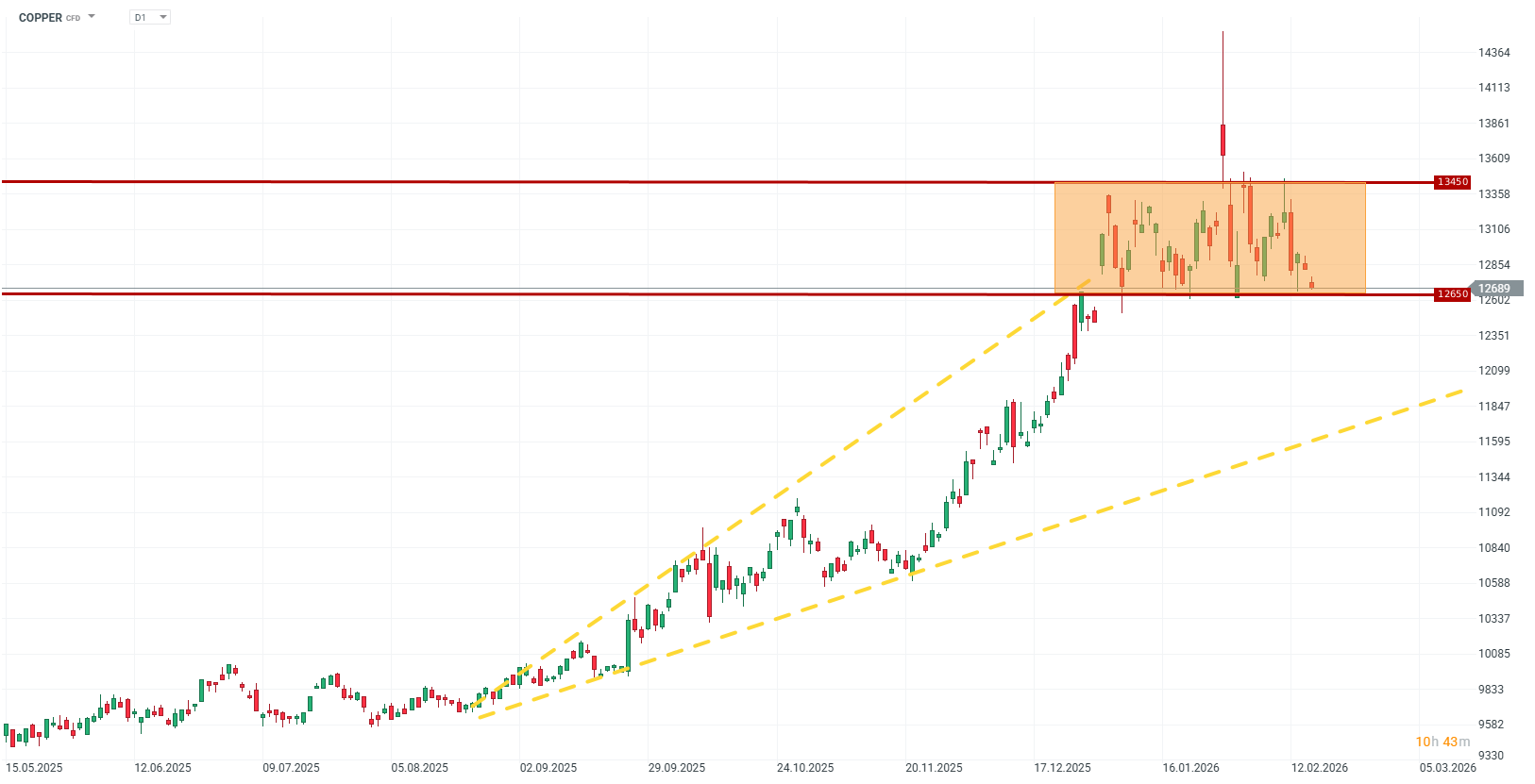
The outlook for the copper market remains strong, with structural fundamentals continuing to support demand. Key megatrends, including the growth of electric mobility, renewable energy, digital infrastructure, and data centers, continue to drive demand for the metal. At the same time, supply constraints, high production costs, and geopolitical factors keep copper prices elevated, benefiting companies like BHP in generating profits and financing further development investments.
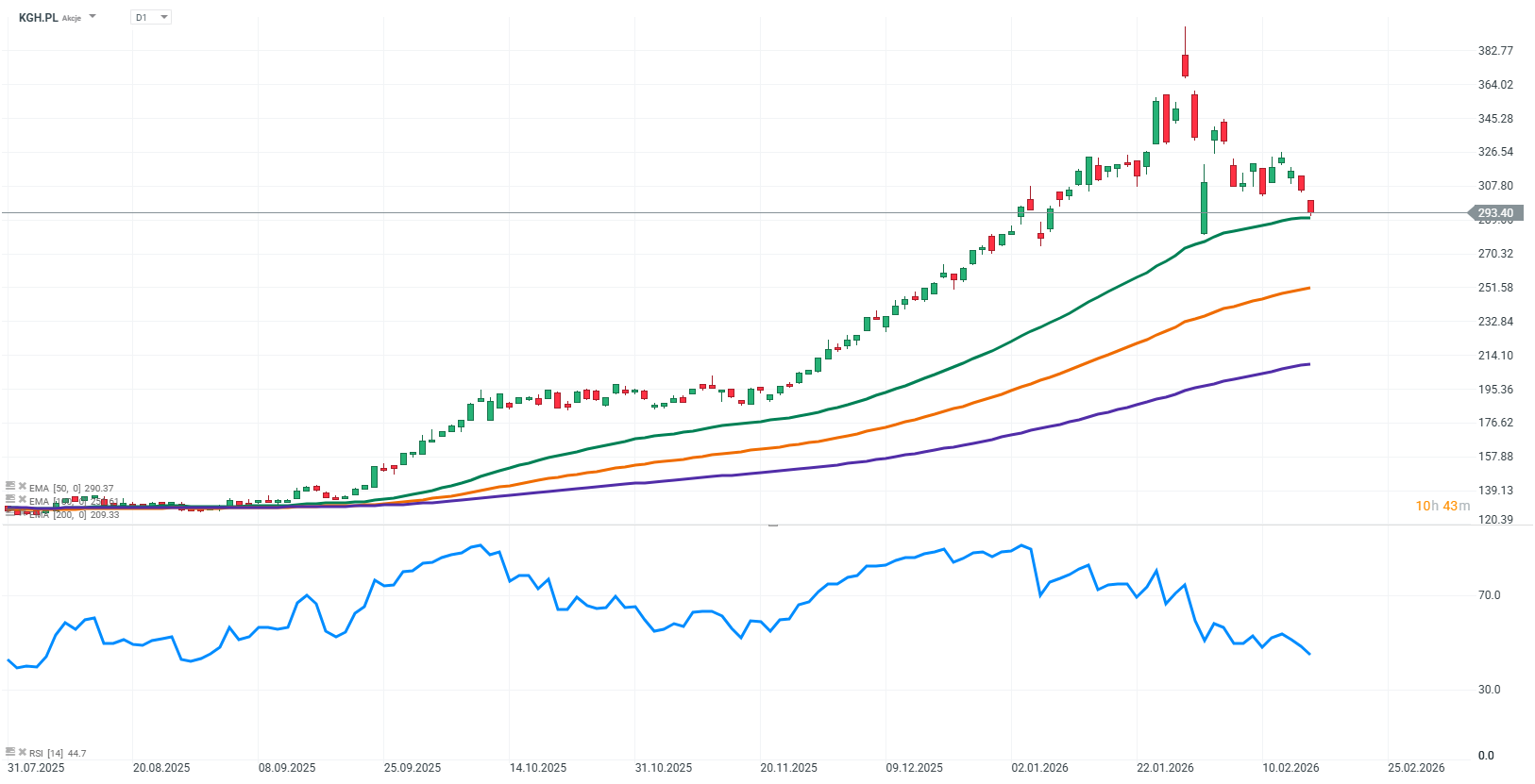
In Poland, the situation is somewhat different. Shares of KGHM Polska Miedź have recently experienced a correction, mainly due to declining global copper prices. In addition to fundamental factors, political and management issues, including changes in the company’s board and the dismissal of the CEO and vice-CEO, have contributed to market volatility. While these factors increase short-term pressure on the stock, they generally do not affect the company’s long-term fundamentals. Despite these temporary disruptions, KGHM remains a stable company.
 Source: xStation5
The current correction in KGHM shares reflects broader trends in copper price fluctuations and elevated volatility related to corporate factors. History shows that price adjustment periods are a natural part of the commodity cycle and often coincide with changes in the macroeconomic environment. Compared to global players such as BHP, it is clear how important portfolio structure and financial flexibility are during periods of heightened uncertainty.
BHP’s results confirm the growing significance of the copper segment in the group’s profit structure, while silver and other assets are being used to optimize the portfolio and manage cash flows. In the case of KGHM, the observed correction is consistent with global copper price fluctuations and local organizational factors. In the commodities sector, the long-term value of companies remains closely linked to the commodity cycle and the ability to generate stable cash flows.


Market wrap: European indices rebound 🔼 Defence stocks on the rise


🔼 EURUSD continues to rebound


TSMC in Talks with Elon Musk Over Terafab


Chart of the Day: NATGAS - Are there chances for a seasonal rebound amid warm weather?