



The Australian Dollar (AUD) is facing a downturn for the second consecutive session. Today, AUD is the weakest currency among G10 currencies, influenced by weaker-than-expected inflation data from Australia. The Monthly Consumer Price Index (CPI) for December reported a decrease to 3.4%, a significant drop from November's 4.3%. This slowing inflation rate has led traders to anticipate two potential rate cuts from the Reserve Bank of Australia (RBA) in 2024.
01:30, Australia - Inflation data:
- Weighted average CPI (Q4): current 4.4% y/y; forecast 4.5% y/y; previously 5.2% y/y;
- Weighted average CPI: current 3.40% y/y; forecast 3.70% y/y; previous 4.30% y/y;
- Trimmed Mean CPI (Q4): current 4.2% y/y; forecast 4.3% y/y; previous 5.2% y/y;
- Trimmed Mean CPI (k/k) (Q4): current 0.8%; forecast 0.9%; previous 1.2%;
- CPI (k/k) (Q4): current 0.6%; forecast 0.8%; previously 1.2%;
- CPI (Q4): current 4.1% y/y; forecast 4.3% y/y; previous 5.4% y/y;
In response to the latest Australian inflation data, the likelihood of the RBA maintaining interest rates unchanged at its upcoming meeting, however, the likelihood of an earlier rate cut later in the year has increased. The Trimmed Mean CPI, a core measure of inflation closely watched by the RBA, also showed a decline to 4.2%, down from 5.2% and below the expected 4.3%.
The Australian Dollar reacted negatively to these developments, with the AUDUSD pair declining by 0.40% at 0.6576.
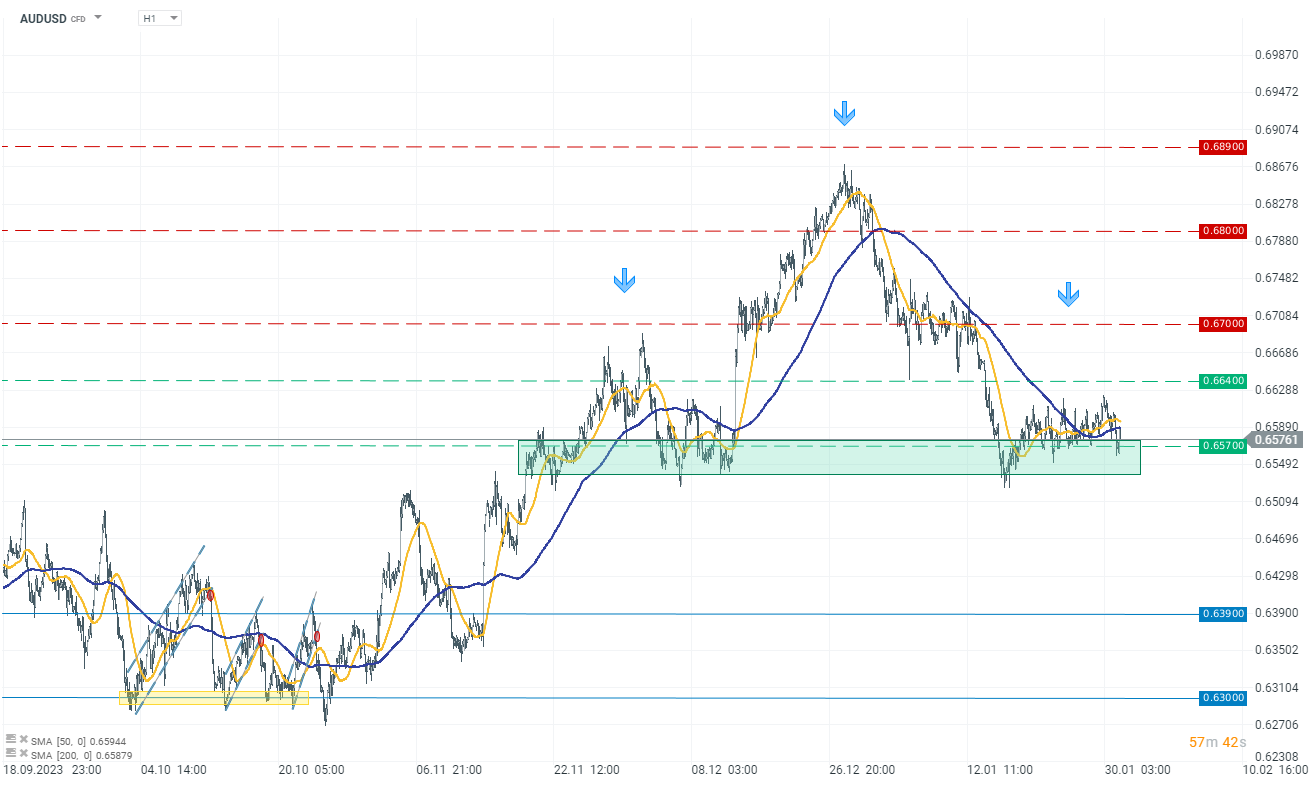 Source: xStation 5


Market Wrap: Clear rebound in Europe against falling oil price. Assets related to Brazil in retreat



Elections in Brazil: Lula returns to power, markets react with panic. Brazilian ETF loses nearly 15% in Tokyo. What about USDBRL, soybeans, sugar, BRAComp, and ETFs?



🟢Morning Wrap: Lack of escalation lowers oil prices. Unexpected Lula victory hurts Brazilian stock market



Three markets to watch next week (23.10.2026)