



A flight to safety can be observed on the market today. Equities, cryptocurrencies and commodities pulling back, while safe haven currencies (CHF, JPY and USD) are gaining. Interestingly, USD strengthening seems to outweigh safe haven flows when it comes to precious metals, with gold and silver pulling back. SILVER is an interesting case as it is the worst performing precious metal, with 3% drop and a move below $30 per ounce mark.
Taking a look at SILVER chart at H1 interval, we can see that the price began to struggle after a strong rally in the first half of May. SILVER bulls failed to break above the $32.25 area and has been trading sideways since. A point to note is that a double top has been painted in the $32.25 area and price broke below $30 per ounce today, which marks a neckline of the double top pattern. This, in theory, suggests that a deeper drop may be looming. A textbook range of the breakout below the neckline is $27.75 per ounce, which would mean reaching the lowest level since May 9, 2024.
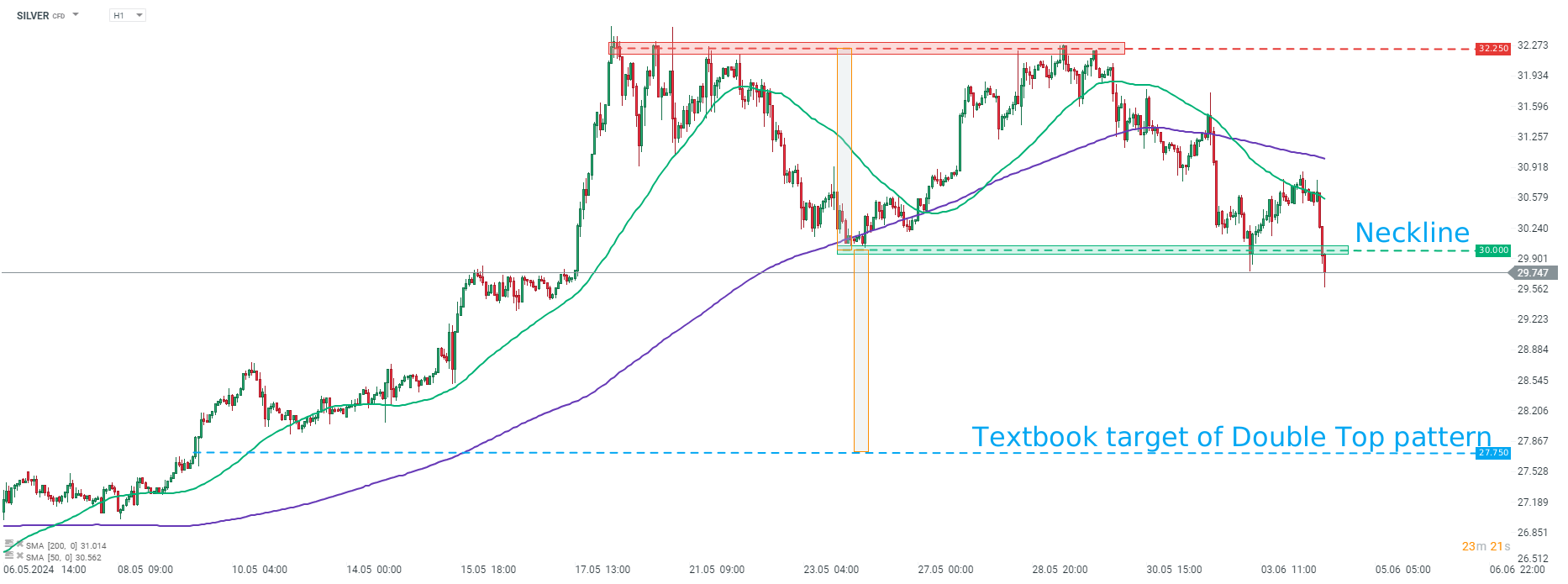 Source: xStation5



Daily Summary: Friday offers no relief; the US100 drops 2%🚨


Three Markets to Watch Next Week (October 16, 2026)


Chart of the Day: NATGAS - Are there chances for a seasonal rebound amid warm weather?


Morning Briefing: Warsh's silence on interest rates. AI debt fears cooled sentiment, but a rebound is visible