


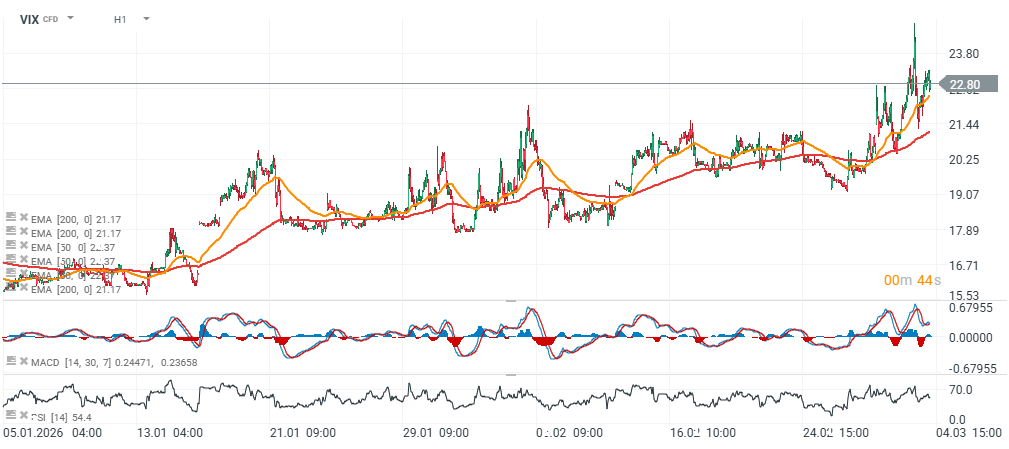
CBOE VIX volatility index futures (VIX) are up nearly 2% today to 22.8, having gained about 20% in recent days, with a peak near 24.5. The main risks currently being hedged by Wall Street are developments in the Middle East (including the potential paralysis of shipping through the Strait of Hormuz) as well as increasingly visible cracks in the private credit and private equity sectors, which were recently highlighted by Apollo Global Management. Among those facing difficulties with their financial products are U.S.-listed firms such as Blue Owl Capital and private markets giant Blackstone. Let’s take a look at what the VIX is currently signaling about S&P 500 volatility.
VIX (H1)
Looking at RSI, we can see a divergence - the indicator is cooling despite the index remaining in a clear upward trend. Meanwhile, the MACD structure suggests the possibility of short-term bearish momentum from the moving averages. On the other hand, on the hourly timeframe the VIX has pulled back to around 50, which could potentially leave room for another dynamic upward move.
Source: xStation5
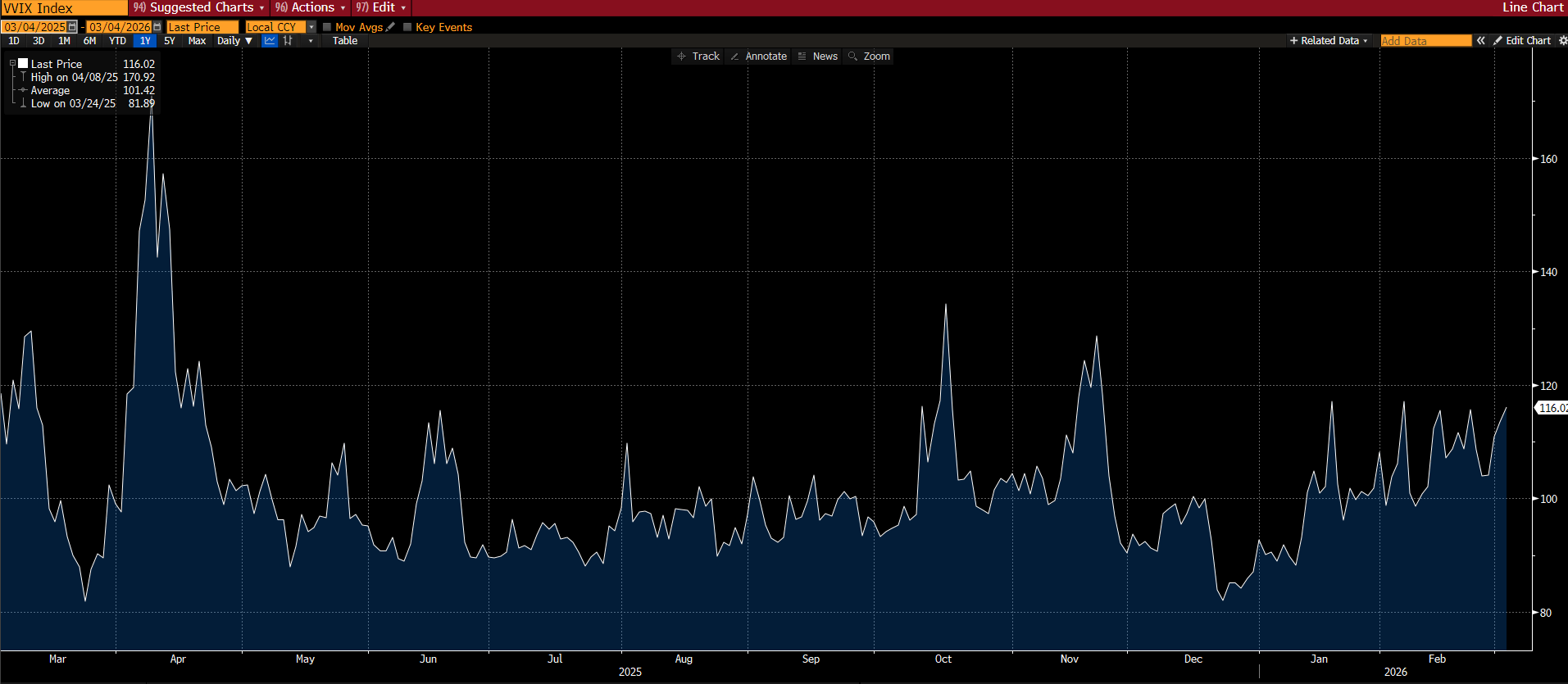
VVIX readings (the expected volatility of the volatility index itself) indicate strong demand for downside protection, although the market does not yet appear to be pricing in a probable crash — which would likely require VVIX above 130.
Source: Bloomberg Finance L.P.
The spread between the front VIX futures contract and the next maturity shows only very mild backwardation (22.8 for UX1 vs 22.55 for UX2). This suggests that the market is pricing slightly elevated near-term risk, but remains far from anticipating a severe panic scenario. The volatility term structure remains relatively flat, pointing more to cautious short-term hedging than to expectations of a lasting volatility shock across markets.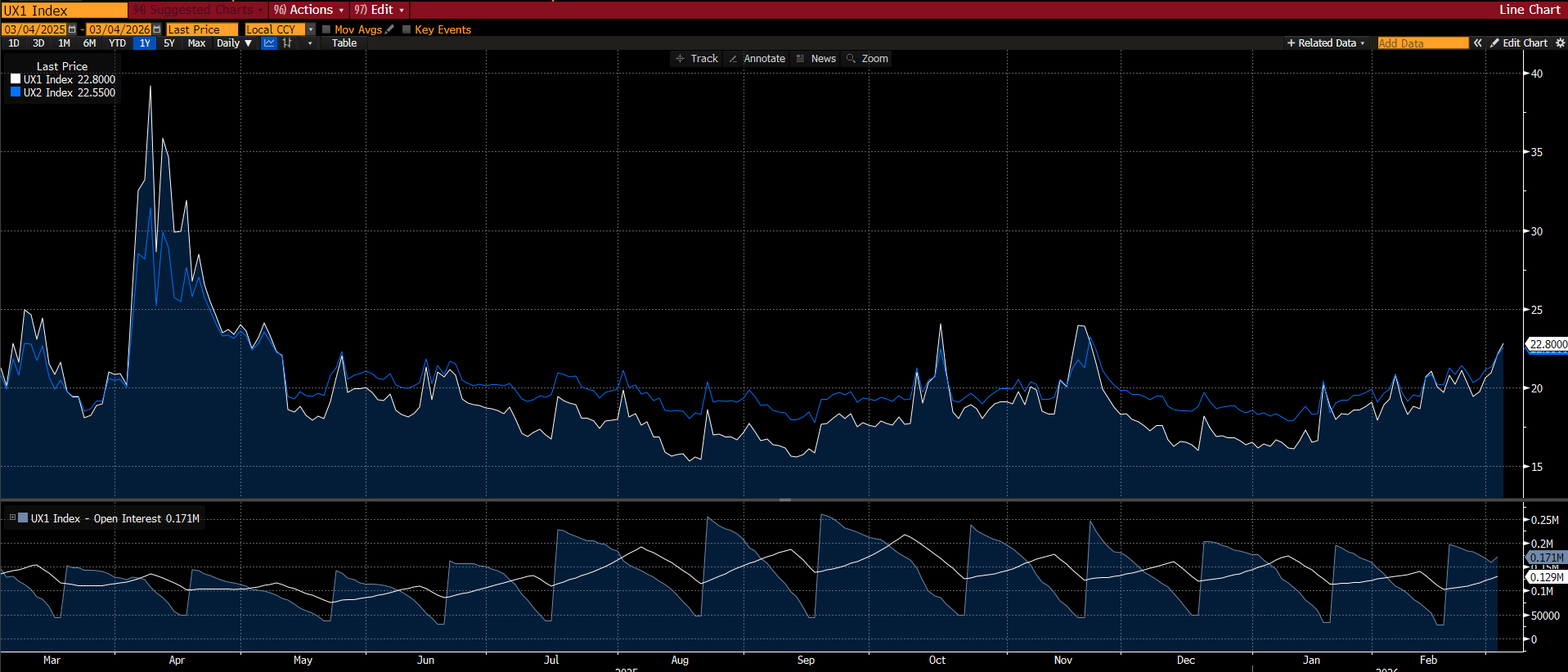
Source: Bloomberg Finance L.P.



Three Markets to Watch Next Week (09.10.2026)



Daily Summary: A Shallow Rebound Ahead of Earnings Season


US OPEN: Trump de-escalates, OpenAI supports Wall Street sentiment

🔼 Gold gains 1.2%