


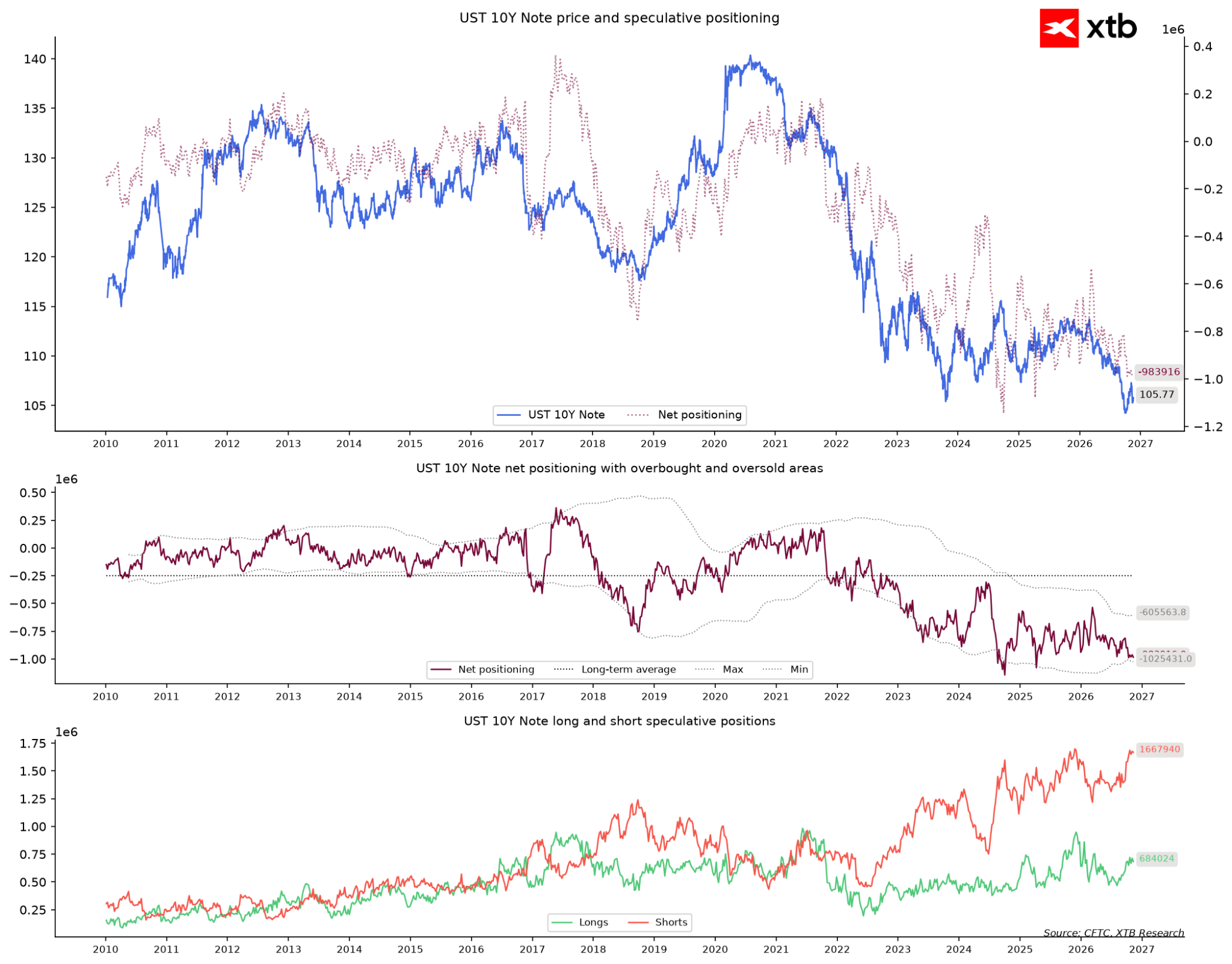
- تحتفظ صناديق المضاربة بمراكز بيع قريبة من مستويات قياسية في سندات الخزانة الأمريكية لأجل 10 سنوات، مما يُنذر بارتفاع حاد في حال انخفاض العائدات.
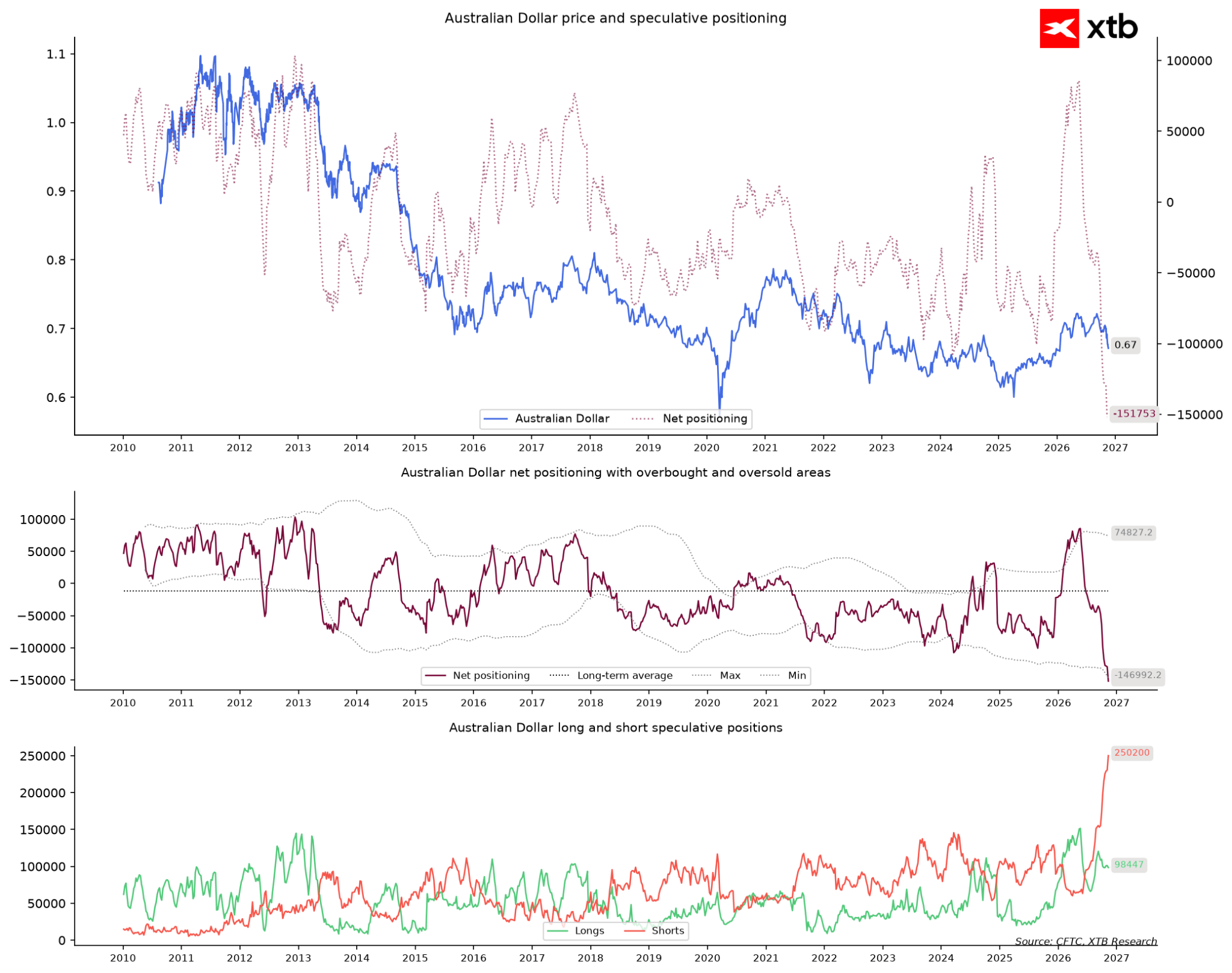
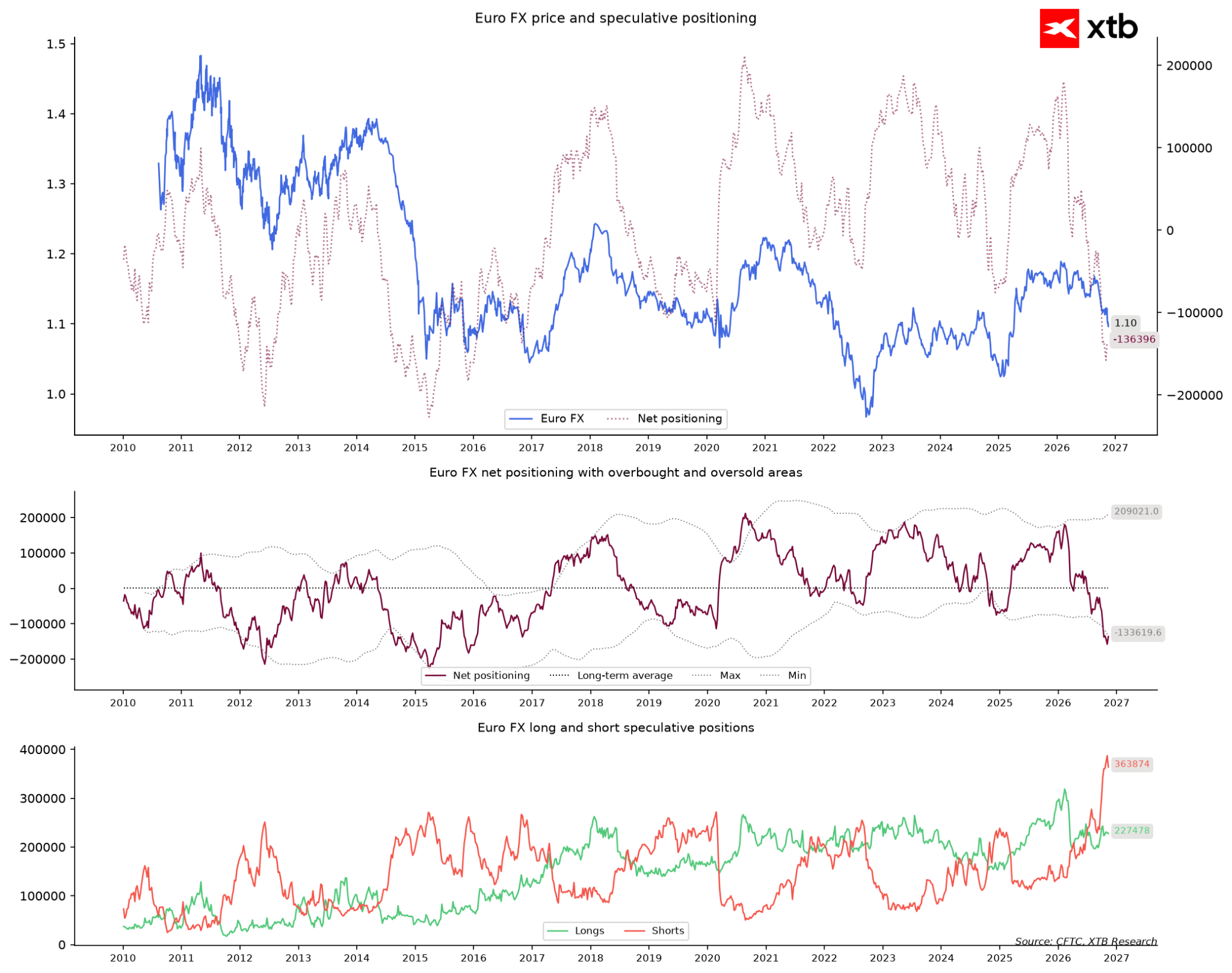
- يزيد حجم مراكز البيع المفرطة في الدولار الأسترالي واليورو من خطر حدوث ضغط محتمل على مراكز البيع.
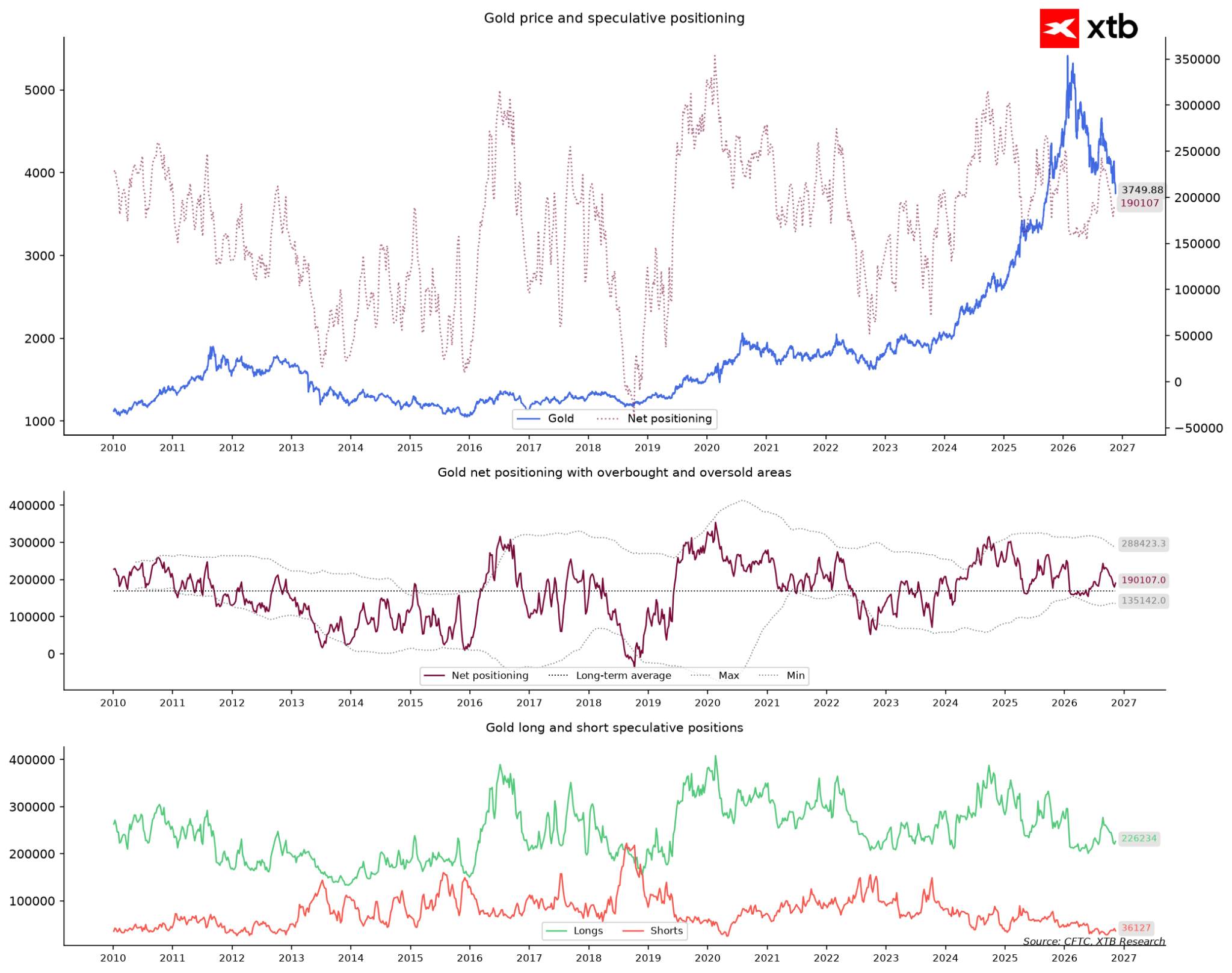
- يحتفظ المضاربون بمراكز شراء كبيرة في الذهب رغم انخفاض سعره مؤخرًا، مما يُشكل نموذجًا مثاليًا لسوق مزدحمة.
- يواجه الغاز الطبيعي إقبالًا كبيرًا على البيع من الصناديق في حين تستقر الأسعار، مما يُهيئ الظروف لارتفاع محتمل في الأسعار.
- يُعاني مديرو الصناديق من مراكز شراء كبيرة في الريال البرازيلي بعد انخفاضه الحاد خلال الشهر الماضي.

- تحتفظ صناديق المضاربة بمراكز بيع قريبة من مستويات قياسية في سندات الخزانة الأمريكية لأجل 10 سنوات، مما يُنذر بارتفاع حاد في حال انخفاض العائدات.
- يزيد حجم مراكز البيع المفرطة في الدولار الأسترالي واليورو من خطر حدوث ضغط محتمل على مراكز البيع.
- يحتفظ المضاربون بمراكز شراء كبيرة في الذهب رغم انخفاض سعره مؤخرًا، مما يُشكل نموذجًا مثاليًا لسوق مزدحمة.
- يواجه الغاز الطبيعي إقبالًا كبيرًا على البيع من الصناديق في حين تستقر الأسعار، مما يُهيئ الظروف لارتفاع محتمل في الأسعار.
- يُعاني مديرو الصناديق من مراكز شراء كبيرة في الريال البرازيلي بعد انخفاضه الحاد خلال الشهر الماضي.
Imagine a situation where almost all passengers on a cruise ship suddenly run to one side to see the same phenomenon. Even if the ocean is calm, the ship begins to tilt dangerously and all it takes is a small wave for panic to ensue. This is exactly the picture presented in the latest CFTC report. However, a small clarification is needed here. The currently available data concerns positioning as of November 10, and a lot may have changed since then. The publication of the latest COT report was delayed due to Veterans Day in the US.
Returning to the analysis, however… The largest speculative players in the futures markets have positioned themselves so one-sidedly in several key areas as they haven't done in years, and in some cases even never in the history of the data.
The common denominator of recent days is an indisputable belief in the strength of the US dollar and the resilience of local yields, set against an almost absolute disbelief in industrial commodities and currencies of other economies. The problem is that when everyone has already sold, the market starts running out of willing participants to open further short positions. At such moments, fundamentals can take a back seat, giving way to the pure mechanics of position closing.
Debt and currencies: Everyone against the rest of the world
The most telling picture prevails in the US debt market. US 10Y Treasury Notes saw a setup in which speculative funds hold nearly 984k net contracts betting on a price decline (i.e. on rising yields). We are talking about a level at which funds are more bearish than in 99% of weeks in the entire trading history, and a mere 29% of all their positions constitute bets on an increase. Institutional investors are behaving as if interest rates in the US were never going to fall significantly. The other side of the trade, i.e. producers and hedgers, stands directly opposite, accumulating record bets on rising bond prices. The market is stretched like a bowstring: any weaker macroeconomic print from the US could trigger a massive wave of contract repurchases.
The same capital has almost completely written off other currencies. The Australian dollar became the target of an unprecedented attack, with funds expanding their net short position to 152k contracts. This sentiment is more pessimistic than in 100% of historical readings, and bets on a decline account for over 70% of their entire portfolio. Such an extremely high number of short positions significantly increases the risk of a short squeeze.
A similar fate befell the euro, where speculators maintain 136k contracts on a exchange rate decline, placing themselves among just a few percent of the most bearish moments in history. Investors are playing the divergence between the Fed and other central banks. The question is: what will happen when this gap stops widening? It is worth noting, however, that EURUSD is near 1.10, and short positions have begun to be slightly reduced.
Gold and silver: Crowded trade amidst fading shine
A completely different dynamic is visible in the precious metals market. At first glance, investors might expect that after a deep sell-off, speculative capital would start fleeing. Nothing could be further from the truth. Gold fell by more than 9% over the past month (with a weekly decline of nearly 6%), falling toward $3,750. Meanwhile, funds… bought another 11k contracts for an increase, bringing the net position up to 190k contracts. As many as 86% of all fund managers' positions in this market are bets on further gains. This is a textbook divergence: the price drops sharply, while speculators persistently average up their bets. On the other hand, looking at recent history, the buyers remain relatively weak.
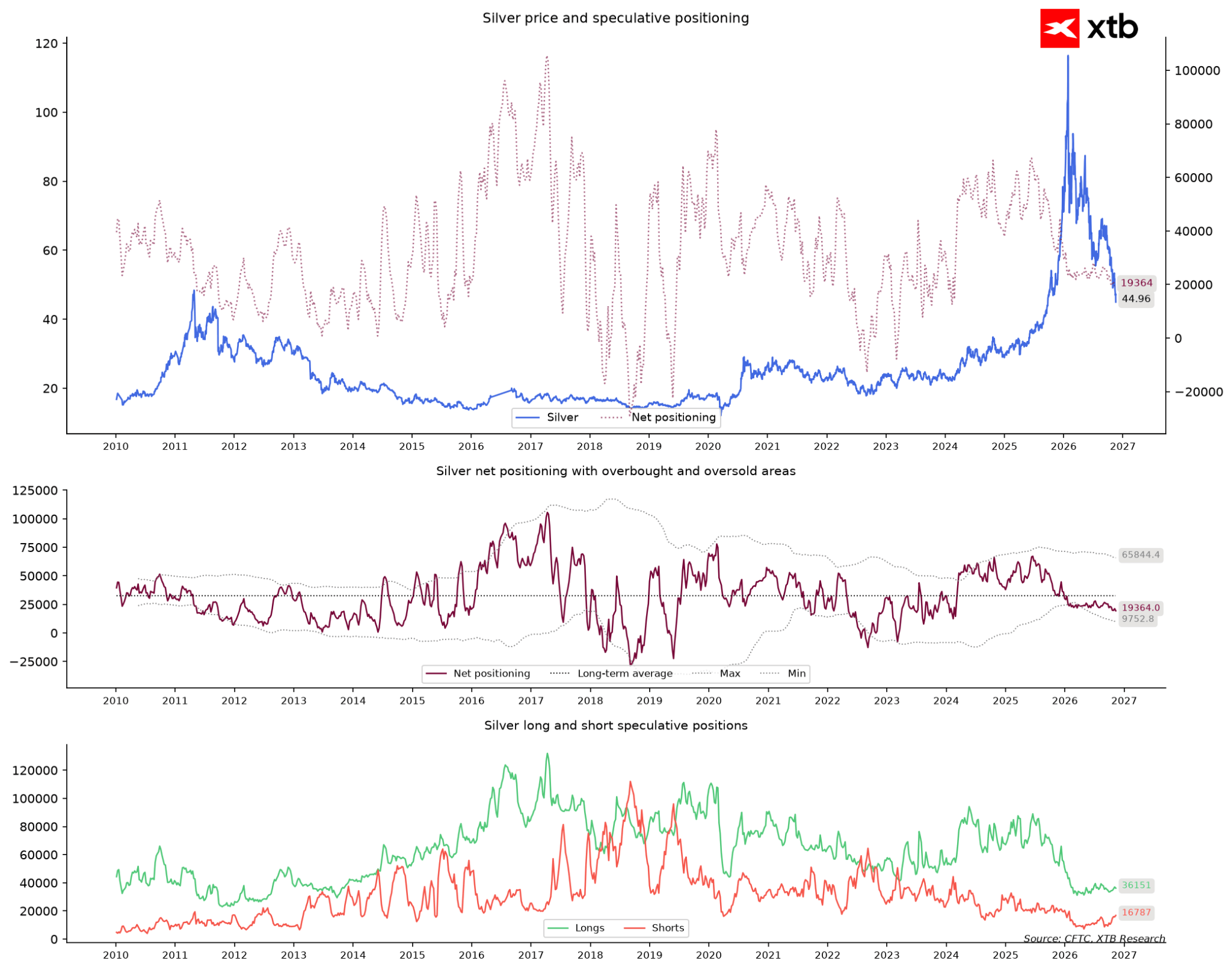
By contrast, silver experienced a real plunge. A price drop of over 20% on a monthly scale (to around $45) pushed the valuation to extremely low levels relative to the past year. Funds hold a modest 19k net long contracts here, reducing exposure in a much more disciplined manner than in gold. Such a discrepancy suggests that gold itself may currently be a market far more vulnerable to further disappointments — if a wave of selling forces "late bulls" to cut losses, the correction could gain momentum like an avalanche.
Natural gas and commodities: Spring coiled to the limit
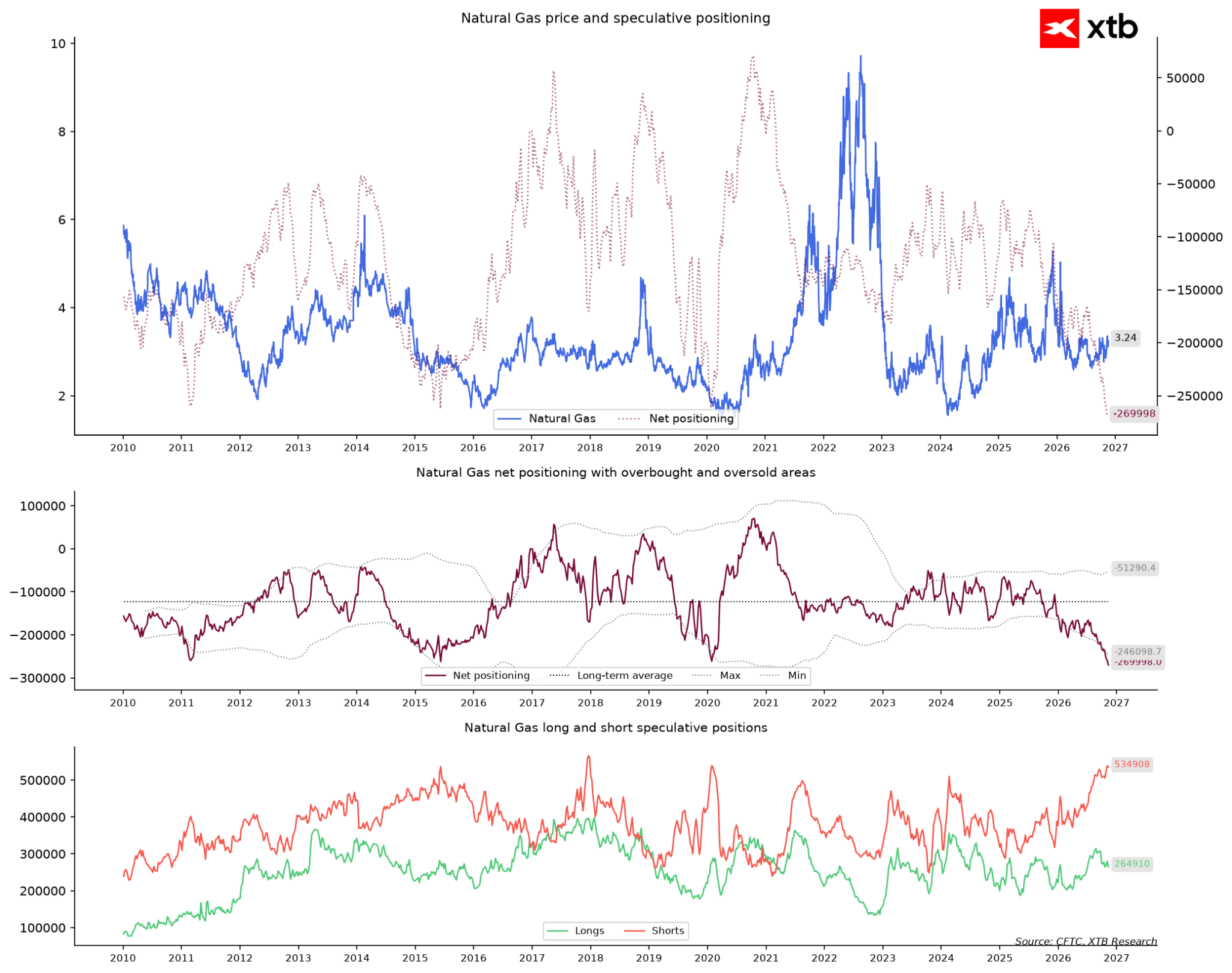
If there is any market exhibiting an environment for a classic short squeeze, it is undoubtedly natural gas. Speculative funds hold as many as 270k net short contracts there. Indicators show unequivocally: funds are more pessimistically inclined today than in 100% of weeks in history. Only one in three positions held by funds is a bet on an increase. Meanwhile, the market shows no desire to fall further — on a monthly basis, the price rose by 7%, stabilizing around $3.25. On the other side stand producers, who are hedging with a long position of over 260k contracts. We are dealing with a complete gridlock of positions: speculators are playing for a further breakdown in prices, but the market has stopped responding to negative triggers. In this case, a single harsh winter spell is all it takes to force a significant reduction in shorts, which could drive prices up by even a full dollar per contract.
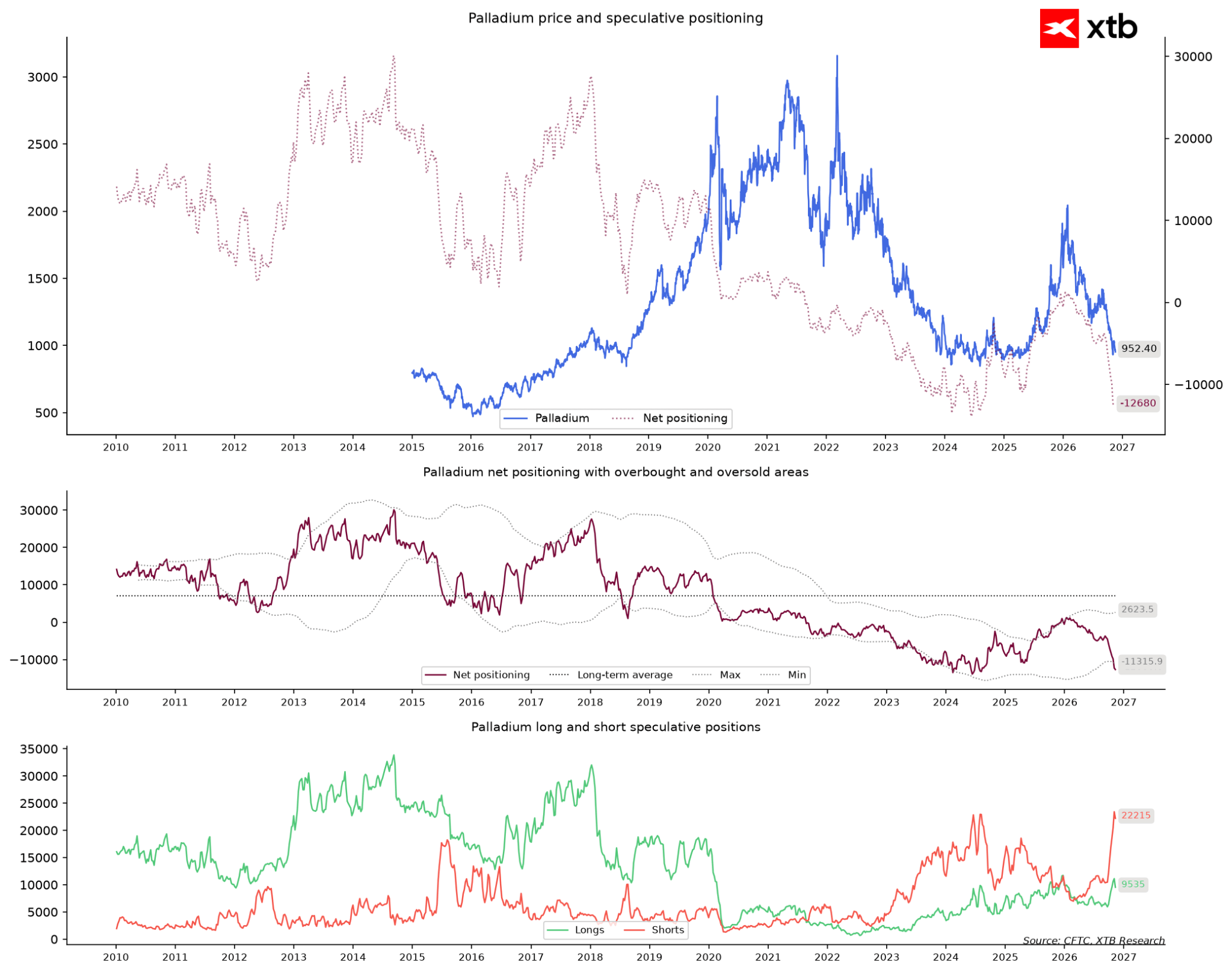
In an almost identical trap, palladium found itself. With the price at $954 (a drop of over 14% in a month), funds also reached a historical 100% extreme of negative sentiment, holding 13k net short contracts. When pessimism becomes absolute, any demand impulse can force nervous closing of short positions at any price.
Emerging market currencies: A painful lesson in catching a falling knife
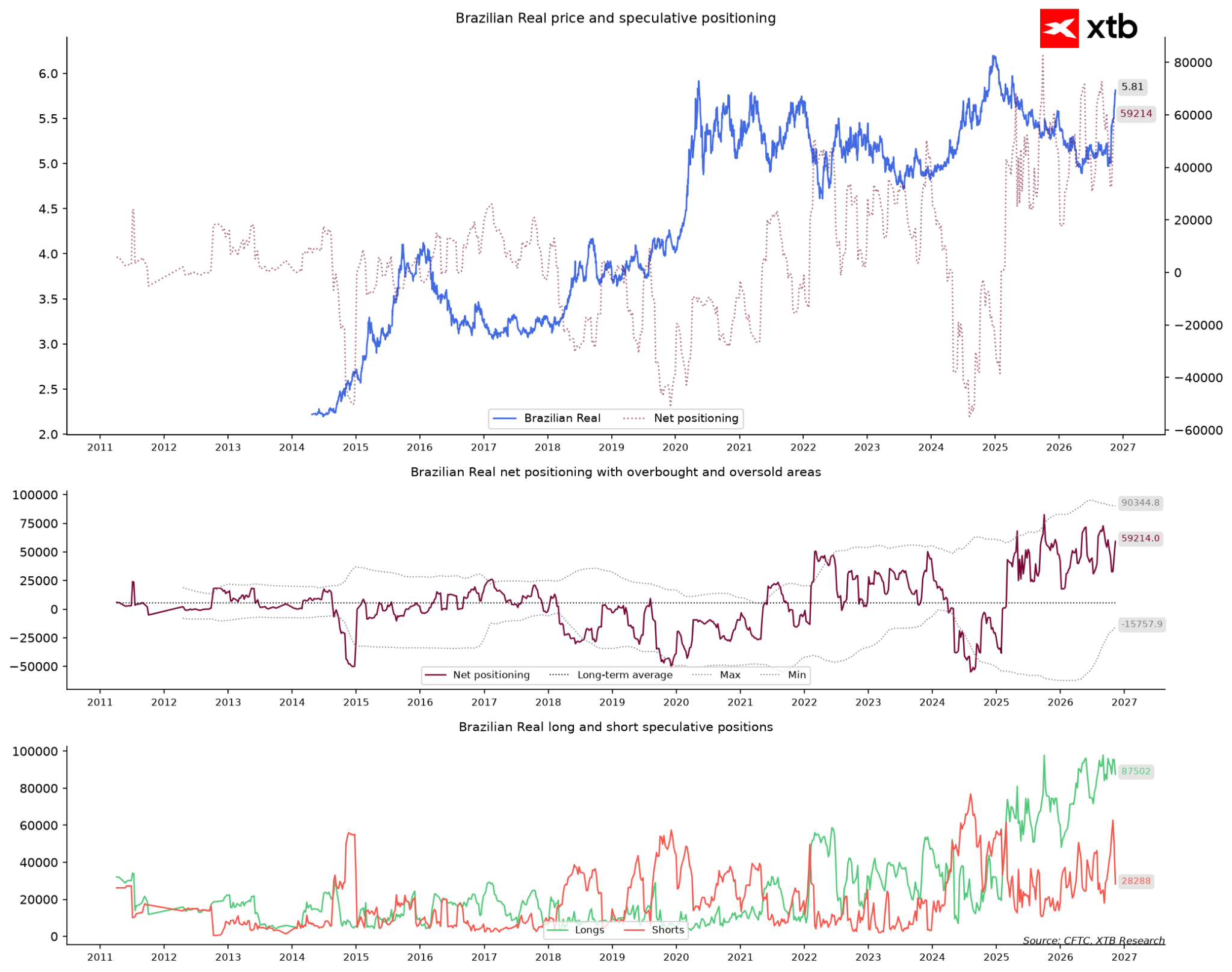
The most dangerous trap of recent weeks was set in the emerging markets currency space, and its victim was the Brazilian real. Fund managers believed almost unreservedly in the strength of the Brazilian currency — their net position stands at 59k long contracts, which represents a bullish stance higher than in 98% of weeks in history (over three-quarters of their positions are bets on real strengthening).
Reality, however, proved ruthless. The USDBRL exchange rate rose by more than 15% in a month, marking a dramatic weakening of the Brazilian currency (the dollar price ended up extremely high compared to the past year, moving more than 3.5 standard deviations above the norm). Funds were brutally trapped on the wrong side of the market. Over the past week, they tried to add to long positions, but with such a strong upward trend in the dollar pair, the pressure to forcibly cut losses grows with each passing day.
What to watch in the coming weeks
A potential breakdown in gold if there is no quick return to growth. If gold prices fail to swiftly return above recent local lows, the coincidence of 86% crowding on the buy side among funds could turn into a classic surrender. The warning signal will be a sharp decline in long positions while breaking new price lows.
Fuel for a massive short squeeze in debt and the Australian dollar. With historically record short positions in the US 10Y bond market and the Australian currency, these markets don't need stellar news to rebound sharply — the absence of new negative triggers is enough. The first turn signal will be a dynamic pullback in US yields, forcing funds to immediately close nearly a million short contracts.
Capitulation of speculators on the Brazilian real. Stubbornly holding long positions on a currency that drops over 15% in a month rarely ends without painful exits. A key indicator here will be the behavior of the USDBRL rate around 5.80 — further weakness in the local currency will force panic position liquidation, which paradoxically could mark the ultimate bottom for that currency.
Markets can remain in extremes longer than logic would dictate, but when there is no one left to add to the list of buyers or sellers on a given position, a change of direction becomes purely a matter of time. The best opportunities are rarely born where the entire crowd stands — they arise much more often in places that the crowd is frantically abandoning.
Where does this data come from and how to read it?
Every week, the US CFTC commission publishes the COT (Commitments of Traders) report, which is a breakdown of how the largest players are positioned in the futures market. We are most interested in speculative funds — large players who usually follow the trend, buying when it rises and selling when it falls. On the other side stand producers and hedgers (farmers, mines, refineries), who hedge the prices of their physical commodities and often take positions opposite to the funds.
When we write that funds are positioned "extremely" or "more one-sidedly than in 95% of weeks," we are comparing their current position with history over recent years. Such an extreme is not a signal in itself — the market can remain in it for weeks — but it means that if something goes against the crowd's expectations, exiting positions can be violent. This is where, among other things, so-called short squeezes originate, which are sudden rallies when players betting on declines must hastily buy back contracts.
CFTC data reflects positioning as of Tuesday and is published on Friday, so it describes positioning with a few days' lag.


انخفاض الذهب بنسبة 2.5% 📉 هل تدخل المعادن النفيسة في سوق هابطة؟


شراكة استراتيجية بـ30 مليار دولار: هل يغير مشروع الغاز السعودي الباكستاني خارطة الطاقة في آسيا؟
أداء مالي مرن ونمو مستدام: إيرادات "إي اف چي القابضة" تقفز إلى 6.7 مليارات جنيه في الربع الثالث

نمو استثنائي وصلابة غير مسبوقة: تقرير "صندوق النقد الدولي" يؤكد متانة اقتصاد الإمارات