



In recent weeks, concerns have arisen over the global energy crisis. The insufficient stockpiles of commodities such as gas and coal after the last winter and the low level of production led to a significant price increases. Now oil is joining this group. It turns out that the weather can have a huge impact on the price of this raw material. Moreover, the price is now at a point where it could threaten the current global economic recovery.
Rising prices of energy commodities
Coal and gas are used mainly in power plants and heating plants. Their prices increased significantly due to the insufficient level of inventories just before the start of the winter period. Low gas and coal reserves and their high prices mean that the world may want to switch to oil in order to produce electricity and use it as a source of heat. JP Morgan indicates that the demand for oil due to high gas prices will increase by 925,000 bpd during the winter season!
 China's coal stocks are very low compared to last year. This increases the demand for gas. In turn, high gas and coal prices mean that the world is starting to switch to oil, which is still relatively cheap! Source: WIND, Energy Aspects
OPEC + does not bring relief to the markets
There is still a clear deficit in the crude oil market. It is obviously triggered by limited production on the part of the OPEC + group. Despite a clear rebound in demand and due to forecasts of further growth, OPEC + maintains its policy of increasing production only by 400,000 bpd each month. The agreement regarding production limits is expected to end in October next year.
 OPEC has a spare production capacity of 7 million brk per day. The current deficit of 1 to 3 million brk per day could be quickly covered by OPEC. Source: Bloomberg
Forecasts of $ 100 a barrel
Bank of America surprised in the summer with its forecast of $ 100 a barrel. Now this price does not seem so far off. The bank points to the high use of diesel and heating oil in relation to gas and coal. Demand is also bouncing back due to the recovery of the aviation sector. However, the coming winter remains the key factor. Concern regarding the heating season caused the annual spread surge above $ 7. This difference is the highest since at least 2013!

The large annual spread is the result of a significant increase in short-term demand. Previously, a difference of $ 2 was considered an extreme level! Source: Bloomberg
Catastrophic economic consequences
Crude oil above $ 70 a barrel is a problem for the two most important emerging economies in the world - China and India. The sale of strategic stocks did not improve the situation. The lack of raw material and rising prices are hampering economic activity. High and rising oil prices indicate that inflation does not have to be temporary. As a result, we may experience a stagflation scenario. This, in turn, is a step towards the "destruction" of demand, which will also lead to problems for raw material producers. Therefore, the $ 100 oil scenario is not unrealistic, but it is certainly very dangerous for the global economy and for many markets, in particular the stock market.
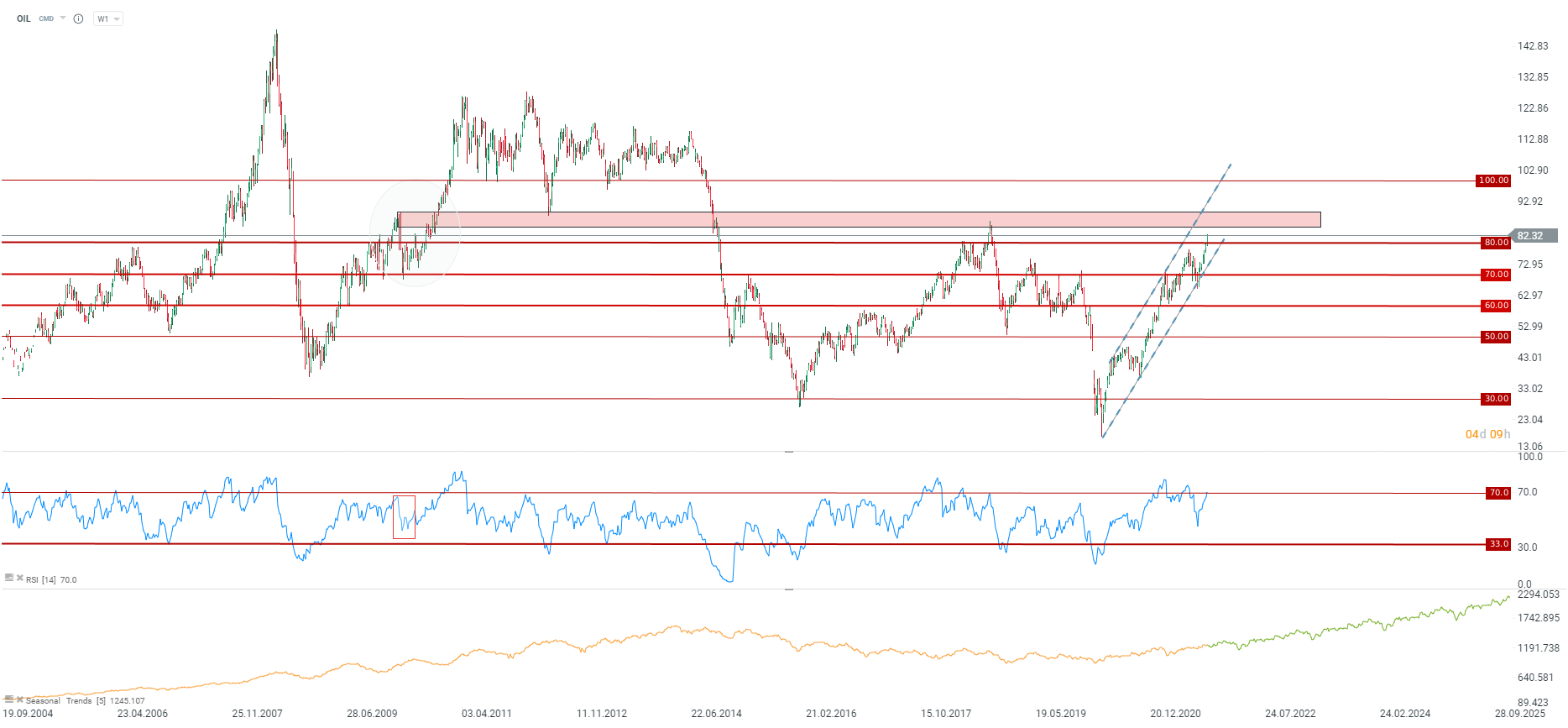 Crude oil prices continue to move in an upward trend. Nevertheless, the level of $ 100 a barrel may lead to a collapse in demand, due to a decrease in economic activity, which could have disastrous consequences for the stock market. The world has not yet shaken off the pandemic threat and high prices are not the result of excessive demand, but the shortage of supply. Source: xStation5




Fed เตรียมส่งสัญญาณสำคัญ ราคาทองคำจะพุ่งขึ้นหรือร่วงลงต่อ?



การเลือกตั้งบราซิล: ลูลากลับสู่อำนาจ ตลาดตอบรับด้วยความตื่นตระหนก ETF บราซิลร่วงเกือบ 15% ในตลาดโตเกียว แล้ว USDBRL ถั่วเหลือง น้ำตาล ดัชนี BRAComp และ ETF จะได้รับผลกระทบอย่างไร?



🟢 Morning Wrap: ราคาน้ำมันปรับตัวลง หลังสถานการณ์ตึงเครียดไม่มีการยกระดับ ขณะที่ชัยชนะเหนือความคาดหมายของลูลา กดดันตลาดหุ้นบราซิล

ข่าวเด่นวันนี้ 26 ต.ค.