



ดอลลาร์ชะลอขึ้นหลังรายงานจาก NYT ว่าอิหร่านแจ้งข้อมูลกับ CIA ว่าพร้อมเจรจา แม้ต่อมาจะปฏิเสธความน่าเชื่อถือของสหรัฐและยืนยันดำเนินปฏิบัติการทางทหารต่อไป ดัชนีดอลลาร์สหรัฐ (USDIDX) จึงหยุดรอบการปรับตัวขึ้น ร่วงประมาณ 0.2% หลังทำจุดสูงสุด 3 เดือน
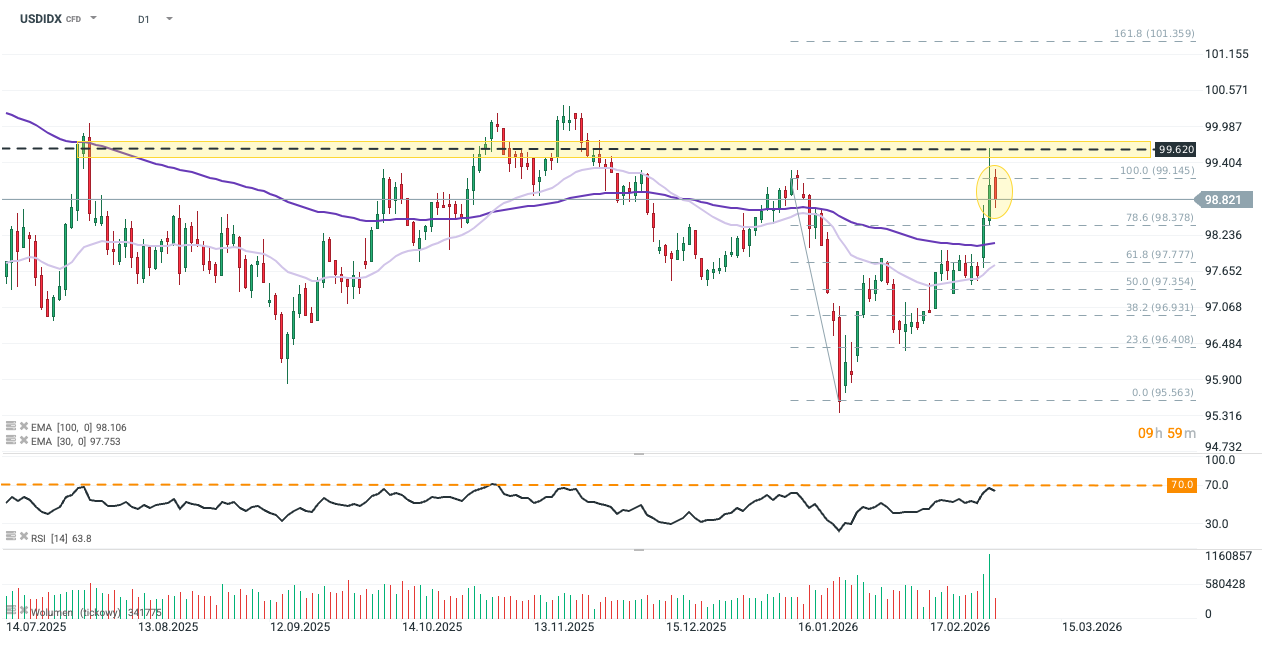
Source: xStation5
นอกเหนือจากผล “flight-to-safety” ความแข็งแกร่งของดอลลาร์ยังถูกหนุนโดยความกังวลเงินเฟ้อโลกที่พุ่งขึ้นอย่างรวดเร็ว ซึ่งสนับสนุนการคงอัตราดอกเบี้ยสูงของสหรัฐ
เจ้าหน้าที่ Fed ส่งสัญญาณเชิงแข็งกร้าวเพิ่มขึ้นแม้ PCE inflation กลับสู่ 3% ส่งผลให้ราคาพันธบัตรสหรัฐปรับตัวขึ้นอย่างรวดเร็ว และความคาดหวังในการลดอัตราดอกเบี้ยปี 2026 ลดลง
อย่างไรก็ตาม ด้วยแรงขึ้นล่าสุดและความไม่ชัดเจนเกี่ยวกับการคลี่คลายความขัดแย้ง การปรับตัวลดลงวันนี้อาจเป็นเพียงเทคนิคัล ไม่ได้หมายความว่าแรงกดดันขึ้นของดอลลาร์จะจบลงแล้ว
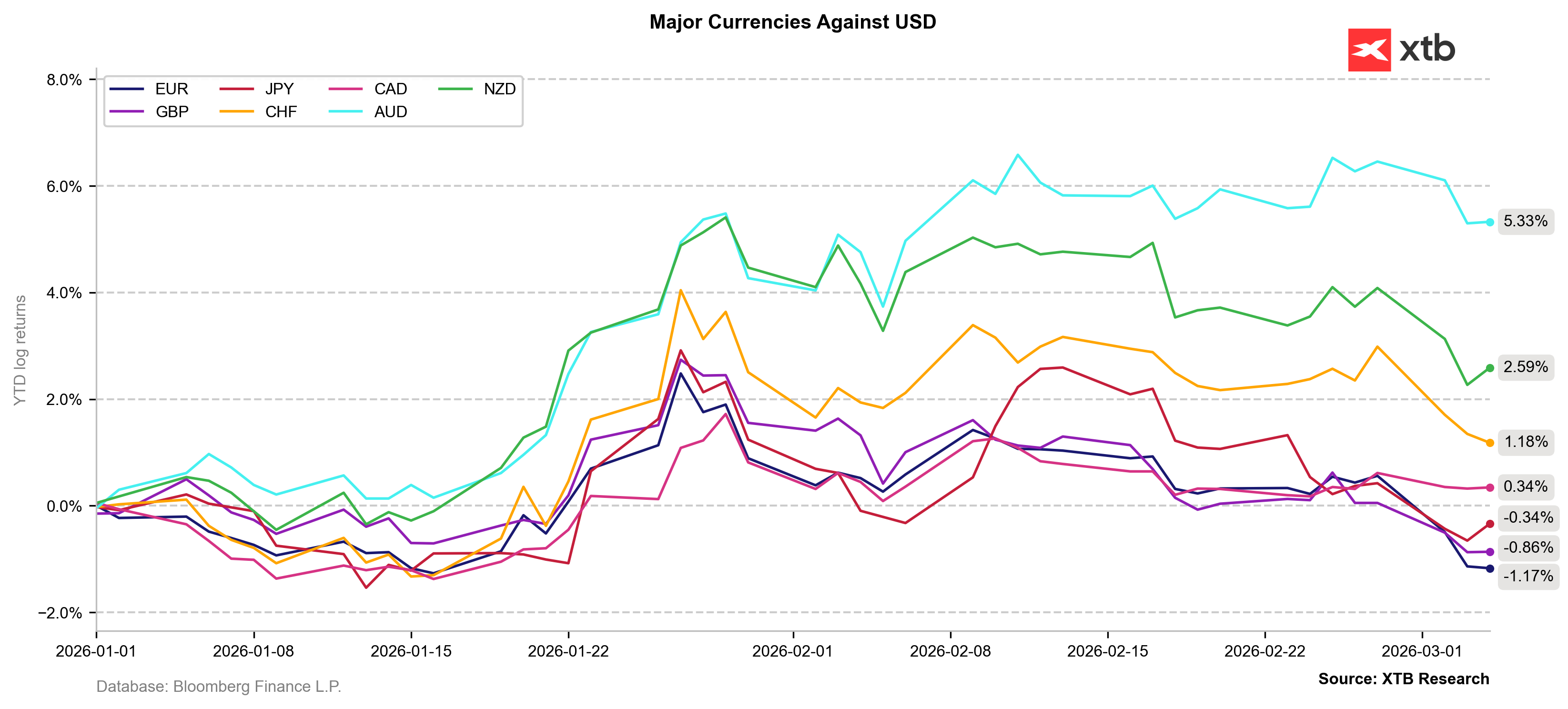
While new inflationary concerns are global in nature, the combined "inflation jitters + flight-to-safety" effect has turned most G10 currencies lower against the greenback. Even the Swiss franc saw a sharp correction. The hardest hit has been EUR/USD, which is down approximately 1.2% YTD. Source: XTB Research
The European Central Bank (ECB) faces an even tougher challenge, forced to weigh the resurgence of inflation against the real risk of recession on the Continent. Natural gas prices in Europe doubled in reaction to the escalating conflict and the suspension of LNG production in Qatar. Energy price relief in recent years was the primary factor helping to contain European inflation and contributing to the observed rise in business activity. A sustained increase in gas prices could, therefore, stifle the gradual recovery of the European economy.
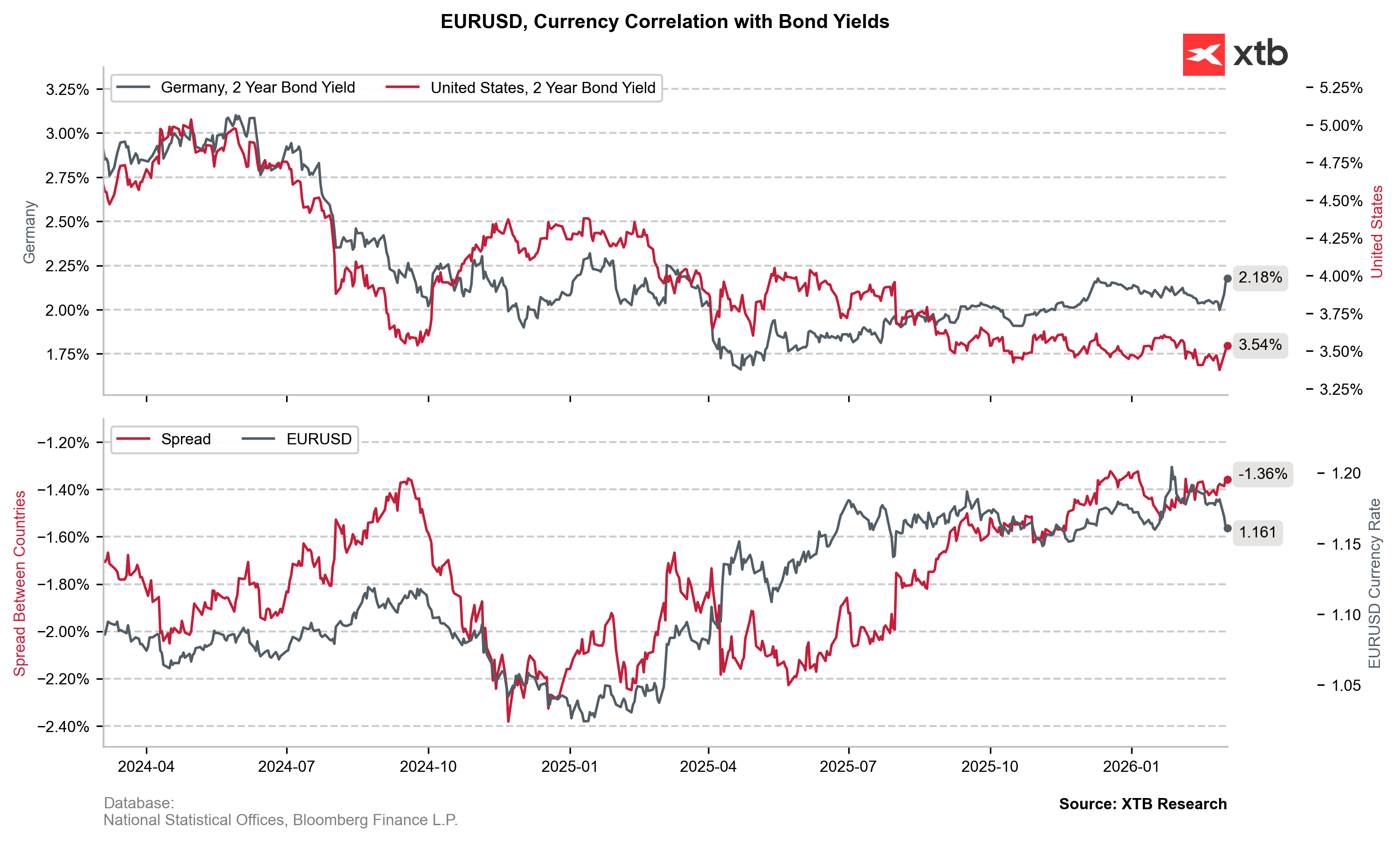
Despite a symmetrical rebound in yields on both sides of the Atlantic, EUR/USD plummeted due to Europe's exposure to gas price volatility, which threatens to wipe out recent gains in economic activity (GDP improvements, rising PMIs). Source: XTB Research
Despite a successful defense of technical support at 1.1600, sentiment surrounding the EUR/USD pair remains decidedly bearish, as confirmed by derivatives market data. The Risk Reversal indicator shows a persistent preference for put options over calls, meaning investors are still paying a high premium to hedge against further Euro declines over the coming month. This pessimism reflects growing concerns over the health of the European economy as it grapples with energy pressure and low gas storage levels—factors that, in the eyes of the market, cast doubt on the sustainability of the current recovery.
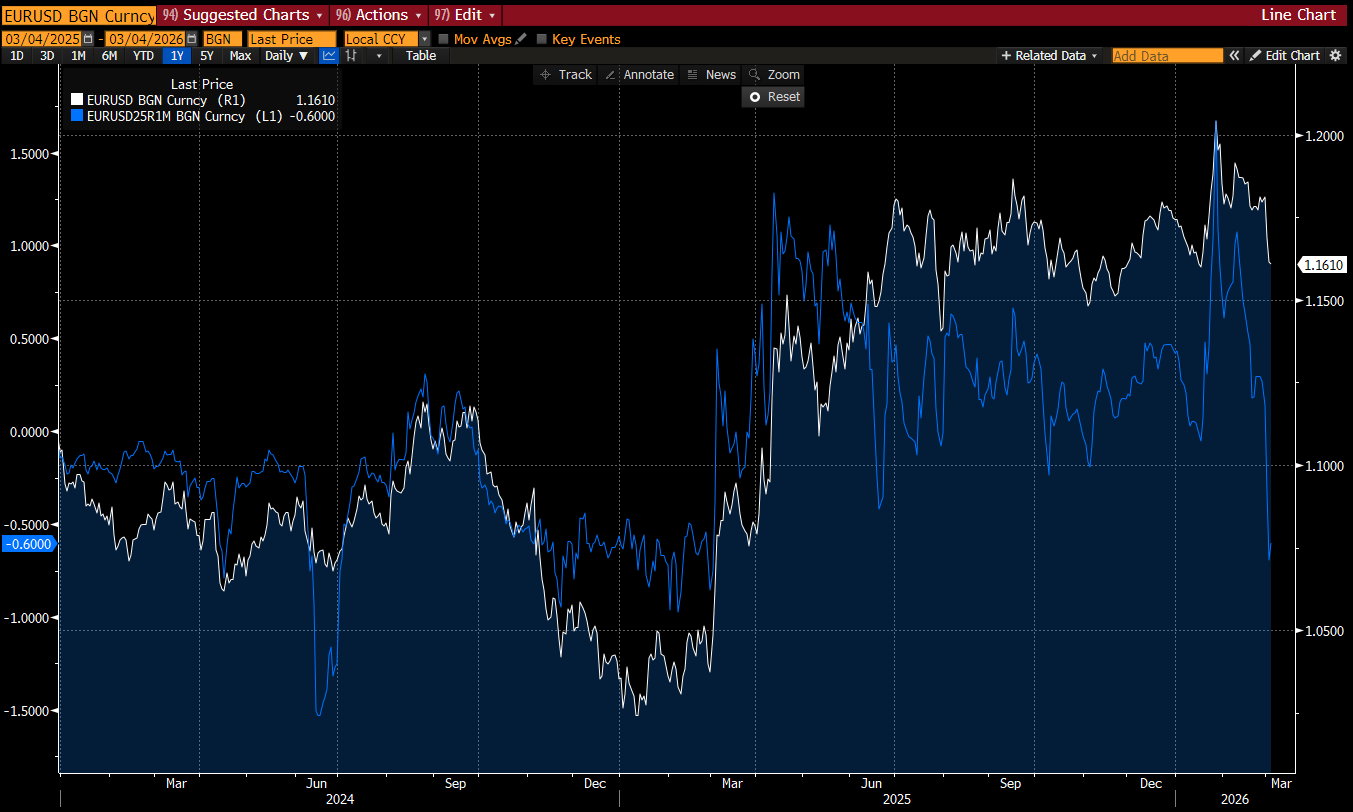
อัตราแลกเปลี่ยน EUR/USD (เส้นขาว) เทียบกับ Risk Reversal แบบ 1 เดือนที่ตลาดสะท้อน (เส้นน้ำเงิน, ค่าเป็นลบ) ที่มา: Bloomberg Finance LP


RBA ส่งสัญญาณ Hawkish มากขึ้น ตลาดเพิ่มคาดการณ์ขึ้นดอกเบี้ยเดือนพฤศจิกายน ⚔️



ข่าวเด่นวันนี้ 21 ต.ค.

ก๊าซธรรมชาติสหรัฐฯ ร่วงต่อเนื่อง 📉🔥



ความกังวลเรื่อง AI กลับมาอีกครั้ง ขณะที่ราคาน้ำมันพุ่งใกล้จุดสูงสุดเดิม