



Morgan Stanley รายงานผลประกอบการไตรมาส 2/2026 โดดเด่นเหนือคาด รายได้และกำไรทำสถิติสูงสุด
Morgan Stanley รายงานผลประกอบการไตรมาส 2 ปี 2026 ที่แข็งแกร่งอย่างมาก โดยสามารถทำผลงาน สูงกว่าที่นักวิเคราะห์คาดการณ์ไว้ทั้งด้านรายได้และกำไรสุทธิ
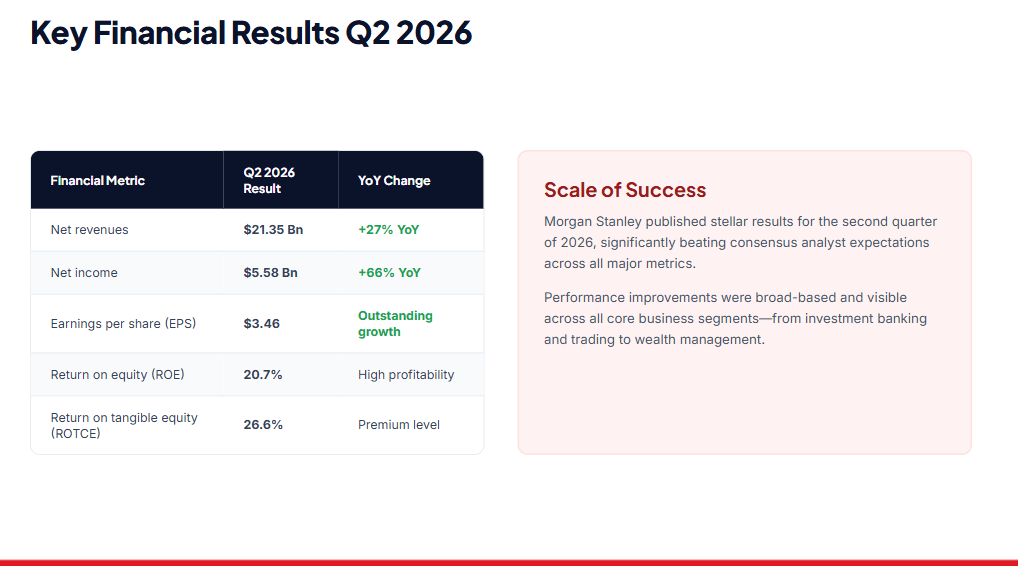
ธนาคารมี รายได้รวมทำสถิติสูงสุดที่ 21.35 พันล้านดอลลาร์ ขณะที่ กำไรสุทธิพุ่งขึ้นสู่ 5.58 พันล้านดอลลาร์ นับเป็นหนึ่งในผลประกอบการที่ดีที่สุดของบริษัทในช่วงหลายปีที่ผ่านมา
การฟื้นตัวเกิดขึ้นในแทบทุกกลุ่มธุรกิจหลักของ Morgan Stanley ไม่ว่าจะเป็น วาณิชธนกิจ (Investment Banking), ธุรกิจซื้อขายหลักทรัพย์ (Trading), บริหารความมั่งคั่ง (Wealth Management) และ บริหารสินทรัพย์ (Asset Management)
อย่างไรก็ตาม จุดเด่นของรายงานครั้งนี้ไม่ได้อยู่ที่ตัวเลขเพียงอย่างเดียว แต่ Morgan Stanley ยังตอกย้ำอีกครั้งว่า บริษัทมี โมเดลธุรกิจที่มีความหลากหลายมากที่สุดแห่งหนึ่งในบรรดาธนาคารเพื่อการลงทุนชั้นนำของโลก
นอกเหนือจากความแข็งแกร่งของธุรกิจตลาดทุนแล้ว ธนาคารยังได้รับประโยชน์จากธุรกิจ Wealth Management ขนาดใหญ่ ซึ่งสร้างรายได้จากค่าธรรมเนียมที่มีความมั่นคงและต่อเนื่อง
ด้วยโครงสร้างรายได้ที่สมดุลนี้ ทำให้ผลประกอบการของ Morgan Stanley พึ่งพาสภาวะตลาดระยะสั้นน้อยกว่าคู่แข่งหลายราย และช่วยเพิ่มความสามารถในการเติบโตอย่างยั่งยืนในระยะยาว
ตลาดตอบรับเชิงบวก หลังหุ้น Morgan Stanley พุ่งกว่า 2% ก่อนเปิดตลาด
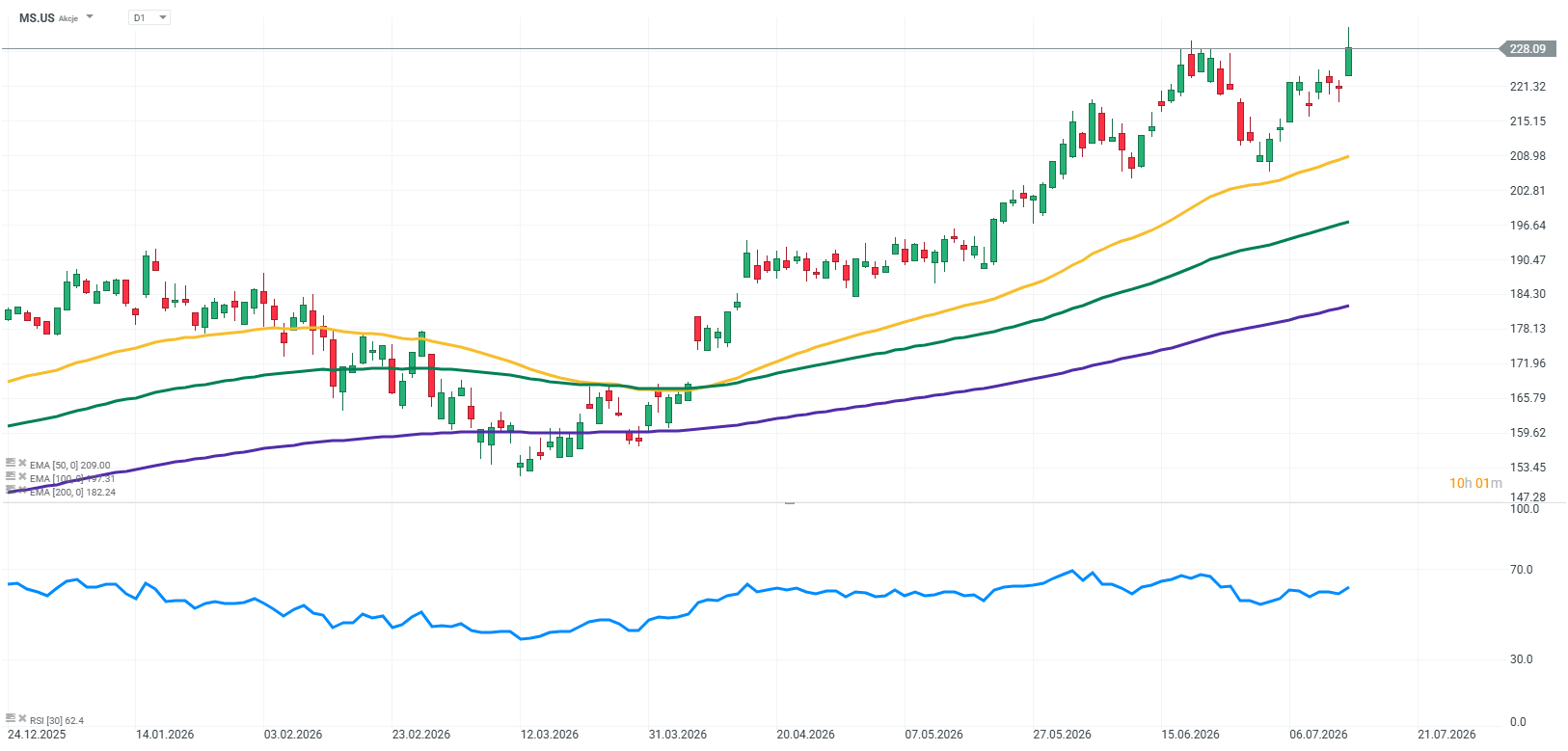
นักลงทุนตอบรับผลประกอบการของ Morgan Stanley ในเชิงบวกอย่างชัดเจน โดยหลังการประกาศงบ ราคาหุ้นปรับตัวขึ้นมากกว่า 2% ในการซื้อขายก่อนเปิดตลาด (Pre-market) เนื่องจากตลาดไม่เพียงประทับใจกับผลประกอบการที่ดีกว่าคาด แต่ยังให้ความสำคัญกับคุณภาพของผลประกอบการ ซึ่งสะท้อนการเติบโตในเกือบทุกกลุ่มธุรกิจหลัก
ไฮไลต์ผลประกอบการ
- รายได้รวม: 21.35 พันล้านดอลลาร์ (+27% YoY)
- กำไรสุทธิ: 5.58 พันล้านดอลลาร์ (+66% YoY)
- กำไรต่อหุ้น (EPS): 3.46 ดอลลาร์
- ผลตอบแทนต่อส่วนของผู้ถือหุ้น (ROE): 20.7%
- ผลตอบแทนต่อส่วนของผู้ถือหุ้นที่มีตัวตน (ROTCE): 26.6%
- Efficiency Ratio: 65% (จาก 71% ในปีก่อน)
- ค่าเผื่อผลขาดทุนด้านเครดิต: 98 ล้านดอลลาร์
- มูลค่าทางบัญชีต่อหุ้น (Book Value per Share): 67.80 ดอลลาร์
กำไรเติบโตโดดเด่น สะท้อนประสิทธิภาพการดำเนินงาน
จุดเด่นสำคัญของผลประกอบการในไตรมาสนี้คือ การเติบโตของกำไรที่เร่งตัวกว่ารายได้ โดยรายได้เพิ่มขึ้น 27% เมื่อเทียบกับปีก่อน ขณะที่กำไรสุทธิพุ่งถึง 66% แสดงให้เห็นว่าธนาคารสามารถใช้ประโยชน์จากสภาวะตลาดที่เอื้ออำนวยได้อย่างมีประสิทธิภาพ
การเติบโตของรายได้ส่งผลให้กำไรขยายตัวในอัตราที่สูงกว่า สะท้อนทั้งประสิทธิภาพในการดำเนินงานและการควบคุมต้นทุนที่มีวินัย
นอกจากนี้ ROE ที่ระดับ 20.7% ยังตอกย้ำความแข็งแกร่งของฐานะการเงิน และแสดงให้เห็นว่า Morgan Stanley สามารถสร้างผลตอบแทนจากเงินทุนของผู้ถือหุ้นได้ในระดับเดียวกับสถาบันการเงินชั้นนำของโลก
อีกหนึ่งปัจจัยที่น่าสนใจคือ Efficiency Ratio ที่ลดลงจาก 71% เหลือ 65% หมายความว่ารายได้เติบโตเร็วกว่าค่าใช้จ่ายในการดำเนินงาน ส่งผลให้ความสามารถในการทำกำไรของบริษัทปรับตัวดีขึ้นอย่างชัดเจน
ธุรกิจ Institutional Securities ยังคงเป็นแรงขับเคลื่อนหลัก
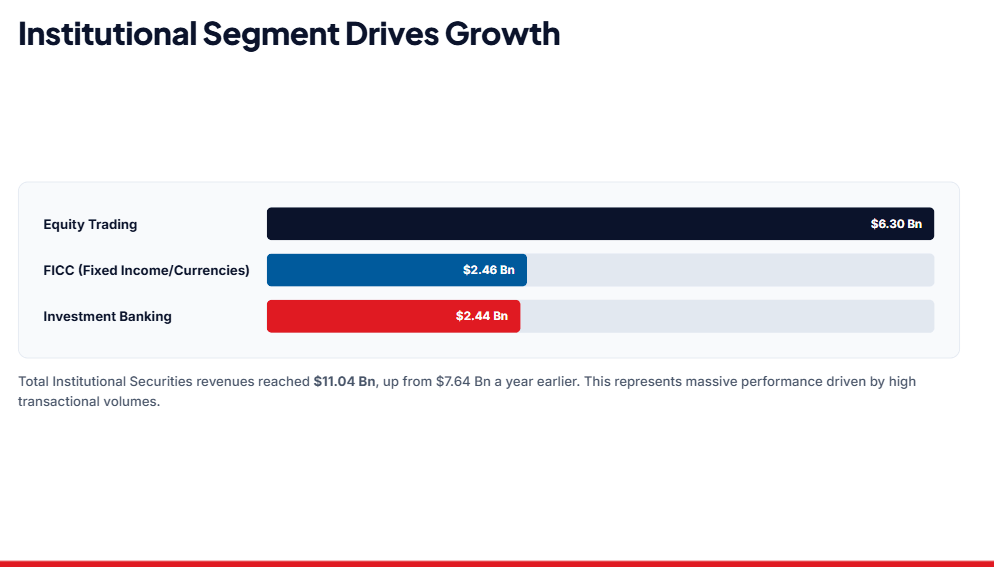
กลุ่มธุรกิจ Institutional Securities ยังคงเป็นตัวขับเคลื่อนสำคัญของผลประกอบการ โดยสร้างรายได้ 11.04 พันล้านดอลลาร์ เพิ่มขึ้นจาก 7.64 พันล้านดอลลาร์ ในช่วงเดียวกันของปีก่อน ได้รับอานิสงส์จากภาวะตลาดทุนโลกที่ฟื้นตัว
ผลประกอบการของแต่ละธุรกิจหลัก
- Investment Banking: 2.44 พันล้านดอลลาร์
- Equity Trading: 6.30 พันล้านดอลลาร์
- Fixed Income, Currencies and Commodities (FICC): 2.46 พันล้านดอลลาร์
ผลการดำเนินงานที่แข็งแกร่งของธุรกิจ Investment Banking สะท้อนการฟื้นตัวอย่างต่อเนื่องของกิจกรรมควบรวมและซื้อกิจการ (M&A) รวมถึงการระดมทุนผ่านการออกหลักทรัพย์ ขณะที่การซื้อขายของลูกค้าสถาบันที่ยังคงคึกคัก ช่วยสนับสนุนรายได้จากธุรกิจ Equity Trading ให้เติบโตอย่างโดดเด่น
การผสมผสานระหว่างปริมาณธุรกรรมที่เพิ่มขึ้นและสภาวะตลาดการเงินที่เอื้ออำนวย ช่วยให้ Morgan Stanley สร้างผลการดำเนินงานที่แข็งแกร่งที่สุดครั้งหนึ่งในธุรกิจนี้ในรอบหลายไตรมาส
Wealth Management ยังคงเป็นจุดแข็งสำคัญของ Morgan Stanley
แม้ว่าธุรกิจ Institutional Securities จะเป็นแรงขับเคลื่อนหลักของการเติบโตด้านกำไร แต่ธุรกิจ Wealth Management ยังคงเป็นรากฐานสำคัญที่ช่วยสร้างความมั่นคงให้กับ Morgan Stanley
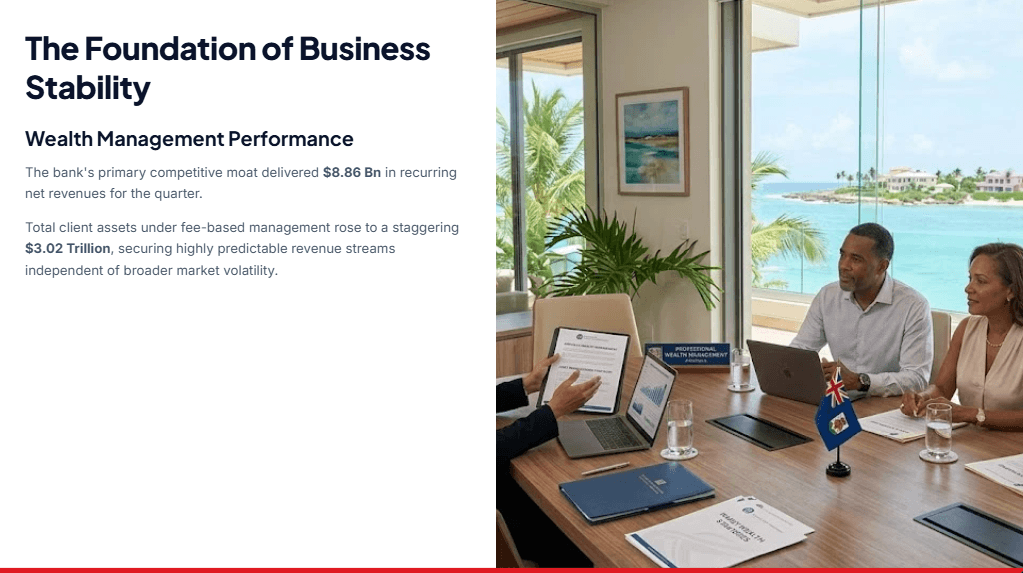
ในไตรมาส 2 ธุรกิจนี้สร้างรายได้ 8.86 พันล้านดอลลาร์ ตอกย้ำสถานะในฐานะหนึ่งในเสาหลักของบริษัท
ตัวเลขสำคัญ
- สินทรัพย์ของลูกค้าภายใต้การบริหารแบบคิดค่าธรรมเนียม (Fee-based Assets): 3.02 ล้านล้านดอลลาร์
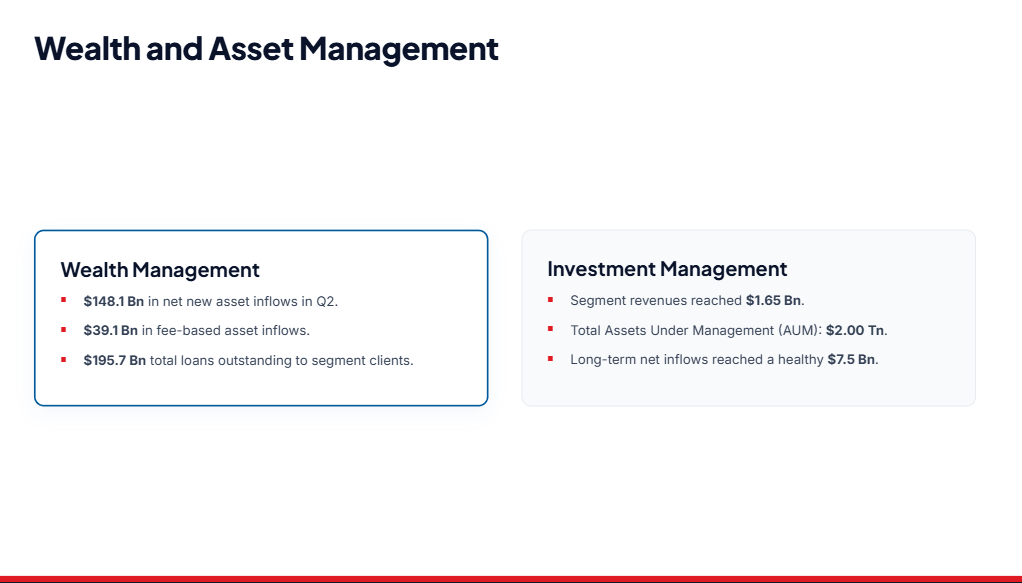
- เงินทุนไหลเข้าสุทธิในสินทรัพย์แบบคิดค่าธรรมเนียม: 39.1 พันล้านดอลลาร์
- สินทรัพย์ใหม่สุทธิ (Net New Assets): 148.1 พันล้านดอลลาร์
- สินเชื่อลูกค้า: 195.7 พันล้านดอลลาร์
ธุรกิจ Wealth Management ถือเป็นปัจจัยสำคัญที่ทำให้ Morgan Stanley แตกต่างจากคู่แข่งหลายราย เนื่องจากฐานสินทรัพย์ของลูกค้าที่มีขนาดมหาศาลสามารถสร้างรายได้จากค่าธรรมเนียมได้อย่างสม่ำเสมอ และมีความอ่อนไหวต่อความผันผวนของตลาดในระยะสั้นน้อยกว่าธุรกิจซื้อขายหลักทรัพย์หรือวาณิชธนกิจ ทำให้ผลประกอบการของบริษัทมีเสถียรภาพมากขึ้นในระยะยาว
เงินทุนไหลเข้าแข็งแกร่ง สะท้อนการเติบโตของฐานลูกค้า
การไหลเข้าของสินทรัพย์ใหม่ในระดับสูง แสดงให้เห็นว่า Morgan Stanley ยังคงสามารถดึงดูดลูกค้าใหม่และเพิ่มมูลค่าสินทรัพย์ที่ลูกค้ามอบหมายให้บริหารได้อย่างต่อเนื่อง ซึ่งถือเป็นสัญญาณเชิงบวกสำหรับนักลงทุน เนื่องจากช่วยสร้างโอกาสในการเติบโตของรายได้ในไตรมาสต่อ ๆ ไป
ธุรกิจ Asset Management เติบโตอย่างต่อเนื่อง
อีกหนึ่งเสาหลักสำคัญของ Morgan Stanley คือธุรกิจ Asset Management ซึ่งสร้างรายได้ 1.65 พันล้านดอลลาร์ ในไตรมาสนี้
ขณะที่ สินทรัพย์ภายใต้การบริหาร (AUM) เพิ่มขึ้นสู่ 2.00 ล้านล้านดอลลาร์ และมี เงินทุนไหลเข้าสุทธิระยะยาว (Long-term Net Inflows) อยู่ที่ 7.5 พันล้านดอลลาร์ สะท้อนการเติบโตที่มั่นคงของธุรกิจบริหารสินทรัพย์ แม้ภาวะตลาดการเงินยังคงมีความผันผวน
Although this segment represents the smallest share of group revenues, its importance continues to grow. Expanding assets under management increase the contribution of stable fee-based revenues and further improve the overall quality of Morgan Stanley’s business model.
Costs, risk and capital position
Operating expenses increased alongside the growth of the business, but the pace of cost growth remained significantly below revenue growth. As a result, Morgan Stanley improved operational efficiency and increased profitability.
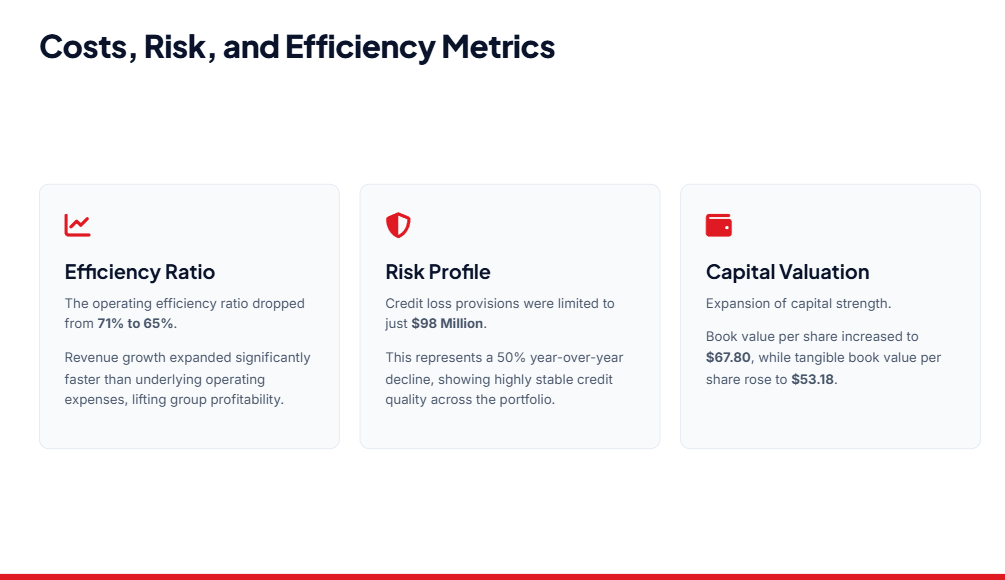
The quality of the loan portfolio also remains strong. Provisions for credit losses totaled only $98 million, half the level recorded a year earlier. Such a low level of provisions suggests that borrowers remain in a stable financial position and that the bank is not experiencing any meaningful deterioration in asset quality.
Why did the market react so positively?
Following the earnings release, Morgan Stanley shares moved higher in pre-market trading. Investors responded positively not only to the scale of the earnings beat but, above all, to the underlying quality and structure of the results.
The bank delivered strong growth in investment banking, record equity trading results, continued expansion of wealth management, high returns on capital, and improved cost efficiency. Equally important, very low credit provisions confirmed the strength of the loan portfolio and the absence of significant signs of stress among clients.
Compared with other major Wall Street banks, Morgan Stanley stands out because its earnings growth does not rely on a single source of revenue. Strong capital markets activity supports trading and investment banking, while the massive wealth management business provides stable and recurring income streams.
This diversification is exactly why investors increasingly view Morgan Stanley as one of the banks best positioned to benefit from the current recovery in financial markets.
Outlook
Morgan Stanley enters the second half of 2026 from a position of significant strength. If merger and acquisition activity remains elevated and investors continue to actively participate in capital markets, the bank has the potential to maintain strong performance in the coming quarters.
At the same time, the scale of the Wealth Management business reduces dependence on the economic cycle and enhances revenue stability. This makes Morgan Stanley one of the most diversified investment banks globally, allowing it to benefit both from improving Wall Street conditions and from the long-term growth of client assets.
What will we be watching in the next quarter?
Investors will focus on several key factors that will determine whether Morgan Stanley can maintain its strong momentum:
-
Whether the recovery in investment banking continues, particularly in mergers and acquisitions and securities issuance activity.
-
Whether the Wealth Management division maintains strong asset inflows and continues to expand fee-based assets.
-
Whether institutional client activity remains elevated and continues to support trading revenues.
-
Whether the bank can maintain high returns on capital while continuing to control operating expenses.
-
How management assesses the outlook for capital markets in the second half of the year and whether it maintains its positive view on the business environment.
Key takeaways
The second quarter of 2026 confirmed that Morgan Stanley is operating in a highly favorable phase of the current market cycle. The bank is benefiting simultaneously from the recovery in investment banking, strong trading activity, and continued expansion of its Wealth Management business, which provides a stable and recurring source of revenue.
Compared with other major financial institutions, Morgan Stanley stands out primarily because of the structure of its business model. Goldman Sachs remains a more direct beneficiary of improving capital markets activity, while Morgan Stanley combines strong exposure to Wall Street with one of the world’s largest wealth management businesses. This allows its results to be not only very strong but also more balanced and less vulnerable to changes in market conditions.
The combination of high profitability, growing client assets, strong cost discipline, and broad revenue diversification makes Morgan Stanley one of the best-positioned banks on Wall Street.
If the current market environment remains supportive throughout the second half of the year, the bank has solid foundations for further earnings improvement and continued high returns.
Source: xStation5


🚩 หุ้น Caterpillar ร่วงต่อเนื่อง ลดลง 30% จากระดับสูงสุดเป็นประวัติการณ์


หุ้น Webull ร่วง 20% ท่ามกลางความกังวลเกี่ยวกับความเชื่อมโยงที่อาจมีกับจีน



Wall Street อยู่ในแดนลบ 🚩 Nasdaq ร่วง 1% จากจุดสูงสุดเป็นประวัติการณ์ ขณะที่ Constellation Brands กลับสู่ระดับเดียวกับเดือนมีนาคม 2020



น้ำมันปรับตัวขึ้นอีกครั้ง ขณะที่ความกังวลด้านการคลังของฝรั่งเศสกดดันยูโร