



Unity Software (U.S.A.) has announced changes to its subscription plans. The most important change appears to be the abandonment of the widely criticized Runtime Fee, whose introduction last year backfired in the game development community.
The company announced today that, after careful analysis and consultation, it has decided to completely phase out the Runtime Fee for customers developing video games. Introduced last September, the initial plan was for the company to charge 20 cents on each installation of a game using the company's engine once the game exceeded $200,000 in sales. The plan also addressed the situation where a game would be installed several times by the same user.
This plan was so negatively received by the gamdev community that Unity had to modify the rules for charging the fee within just a few days after its presentation. The final result was a fee based on 2.5% of revenue if a certain cap is hit, or charged on player growth, and it was left to the developers to decide. Nevertheless, the confusion over the new fee resulted in a nearly 20% drop in the company's stock price in just two weeks.
Today, the game engine maker announced a complete withdrawal of this fee for game developers with immediate effect. The company has instead decided to introduce traditional increases in subscription plans, which will apply to larger customers.
Unity Personal, the smallest package available to developers whose generated revenue is less than $200,000, will remain free. Unity Pro, aimed at developers whose annual revenues exceed that level, will cost $2,200/year (an 8% increase), and Unity Enterprise, to which developers with annual revenues exceeding $25 million are required to subscribe, will increase by 25%.
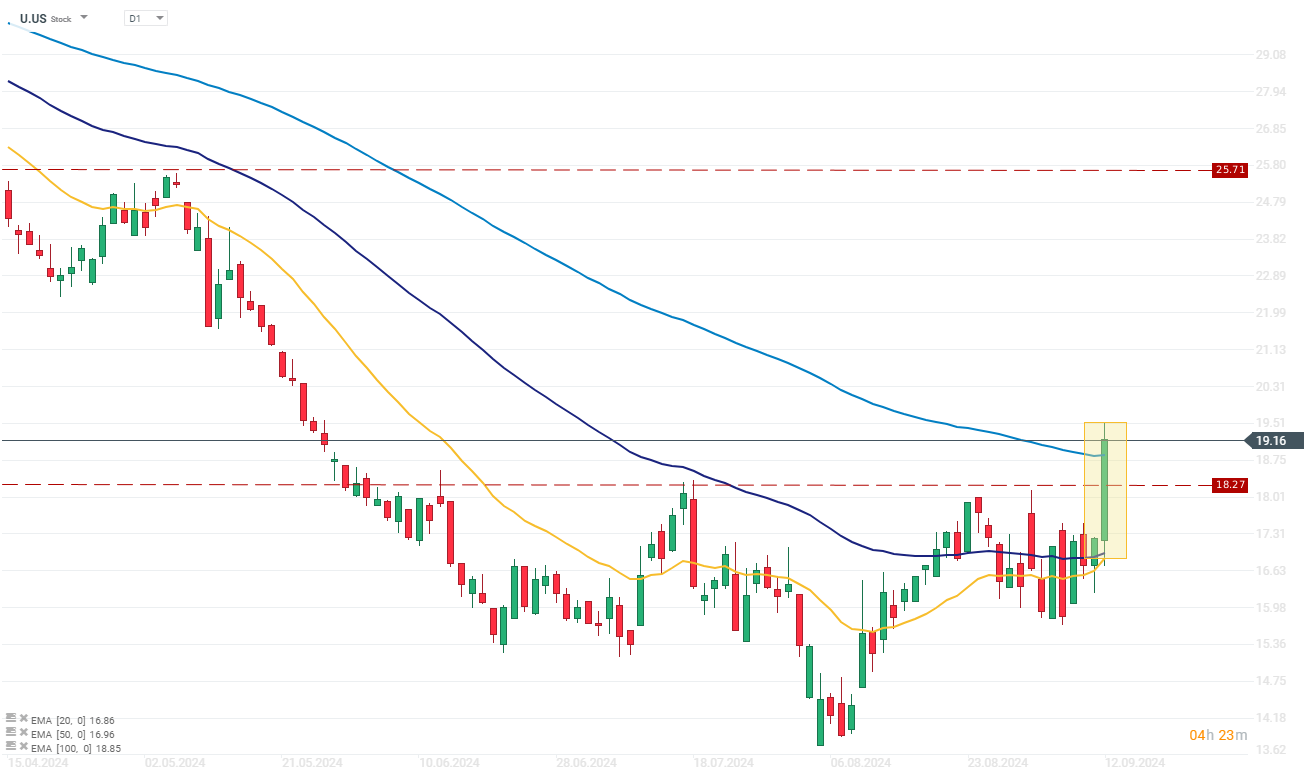
The changes proposed by the company have been received positively by the market, and Unity's stock price is up more than 11%, reaching its highest levels since May of this year. Source: xStation





ความกังวลต่อความสามารถในการทำกำไรของ AI จุดชนวนแรงเทขายในตลาด 📉



ข่าวเด่นวันนี้ 23 ต.ค. มูลค่าหุ้นเผชิญแรงกดดัน เงินทุนไหลออกจากกลุ่มเทคโนโลยี

ผลประกอบการต่ำกว่าคาดและราคาน้ำมันที่พุ่งสูง กดดันดัชนีหุ้นร่วงลง

ผลประกอบการที่ “พอใช้” ยังไม่เพียงพอ